




Categories
How to Handle Burn Injuries in Kids: A Practical Guide
Jan 17, 2025
Do’s:
- Cool the burn: Gently wash the burn area under running cool water(NOT ice water) for at least 10-15 minutes.
- Clean the area: Use mild soap to clean the area carefully, then pat dry the wound with a clean cloth.
- Apply aloe gel/bacitracin ointment: If available, apply a thin layer of aloe vera gel for superficial burns to soothe the skin.
Don’ts:
- Avoid home remedies: Do not apply toothpaste, turmeric, butter, or any ointment. These can worsen the injury or make it difficult for doctors to assess the wound.
- Don’t use cotton: Avoid covering the wound with cotton as the fibres can stick to the injured area, causing further pain and complications.
When to Bring Your Child to the Hospital?
Certain situations require immediate medical attention. Bring your child to the hospital if:- The burn is on the hands, feet, face, or private areas.
- The burn covers an area larger than the size of your hand.
- Near a joint or covers any part of your body all around
What Happens at the Hospital?
When you arrive at the hospital, the medical team will:- Inspect the wound: Assess the degree and severity of the burn.
- Determine treatment: Decide whether the child can be treated at home or needs to be admitted for further care.
- Plan management: Provide appropriate care and plan further course of treatment
Related BlogView More
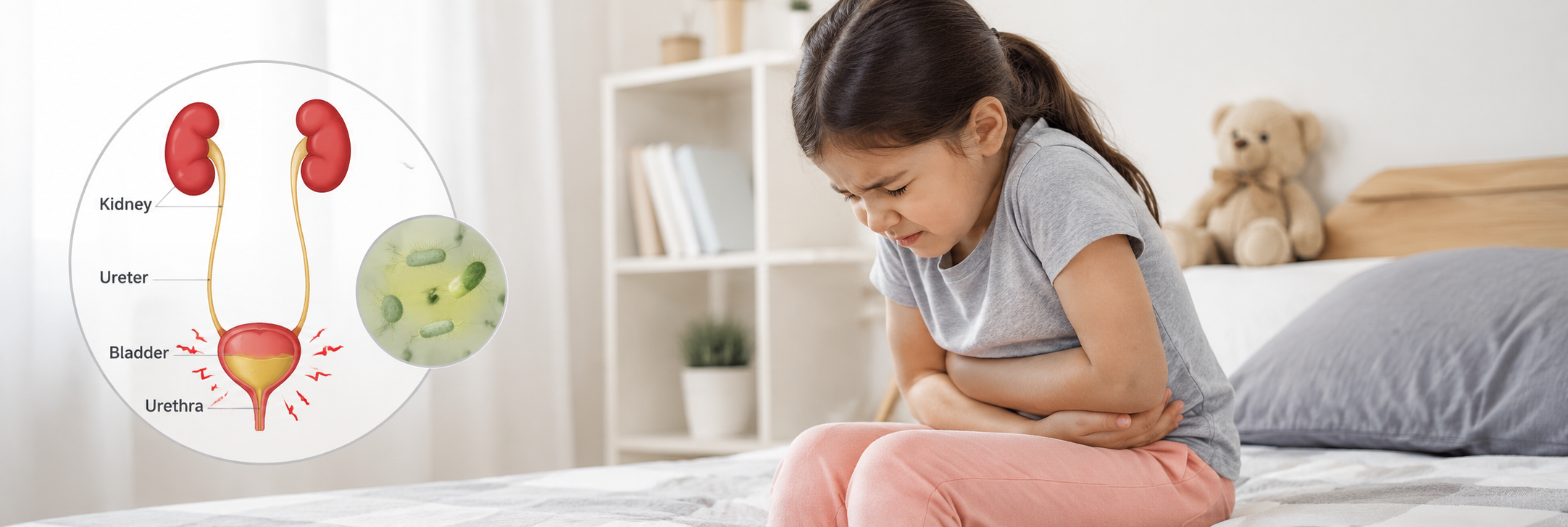
UTIs in Children: Symptoms, Causes, Treatment, and Prevention Guide
Urinary Tract Infections (UTIs) can be uncomfortable and distressing for children, especially when symptoms are difficult for them to explain. UTIs in children are relatively common and may affect the bladder, urethra, or kidneys. Early diagnosis and treatment are important

Vitamin D Deficiency in Kids: Signs, Risks, and Solutions
Vitamin D deficiency in kids is becoming increasingly common due to reduced outdoor activity, limited sun exposure, and dietary gaps in growing children. This essential nutrient plays a key role in bone strength, muscle development, and immunity. When levels are low, children

Otosclerosis in Kids: Causes, Symptoms and Treatment Explained
Otosclerosis is a condition that affects hearing due to abnormal bone growth in the middle ear. Although it is more commonly seen in adults, in rare cases it can also affect children, leading to gradual hearing difficulties. Early recognition of otosclerosis symptoms is important
Dehydration in Children: Symptoms, Stages, and Clinical Care
Dehydration in children can be worrying for parents, especially when symptoms appear suddenly during illness. It happens when a child loses more fluids than they take in, commonly due to fever, vomiting, or diarrhoea. Early signs may include thirst, dry mouth, reduced urine, and