




Categories
When to Take Your Child to the Emergency Room for Stomach Pain?
Jan 17, 2025
When to see a doctor for Stomach Pain?
It’s crucial to recognize the signs that indicate the severity of your
child’s stomach pain. Here are four key points to keep in mind:
- Severe pain and crying: If your child
is crying excessively due to stomach pain and cannot be comforted, this
may indicate a serious condition.
- Green-colored vomit: Vomiting with
a greenish color could be a sign of any serious issue. Do not ignore this
symptom.
- Abdominal distension: If your
child’s stomach appears bloated or distended, this could point to an
underlying problem that requires urgent medical evaluation.
- Blood in the stool: Blood in your child’s stool is always a cause for concern and warrants immediate medical attention.
What happens in the
Emergency Room for severe Stomach Pain?
If you take your child to the emergency room with severe stomach pain,
the medical team will assess whether the issue is medical or surgical in
nature. Some conditions, like intussusception (common in children aged 1-2
years) or appendicitis are surgical emergencies and require prompt intervention.
Here’s what you can expect during the evaluation:
- Initial assessment: The doctor
will examine your child and take a detailed history of the symptoms.
- Diagnostic tests: Basic tests
such as blood work, X-rays, and ultrasounds may be performed to identify
the cause of the pain.
- Treatment plan: Based on the findings, the medical team will
determine the appropriate treatment.
Don’t ignore the warning signs of severe stomach pain in your child. Prompt action can make a significant difference, especially in emergencies.
Our 24/7 Consultant Led Advanced Pediatric Emergency Services are
always prepared to handle any health emergency your child may face!
Related BlogView More
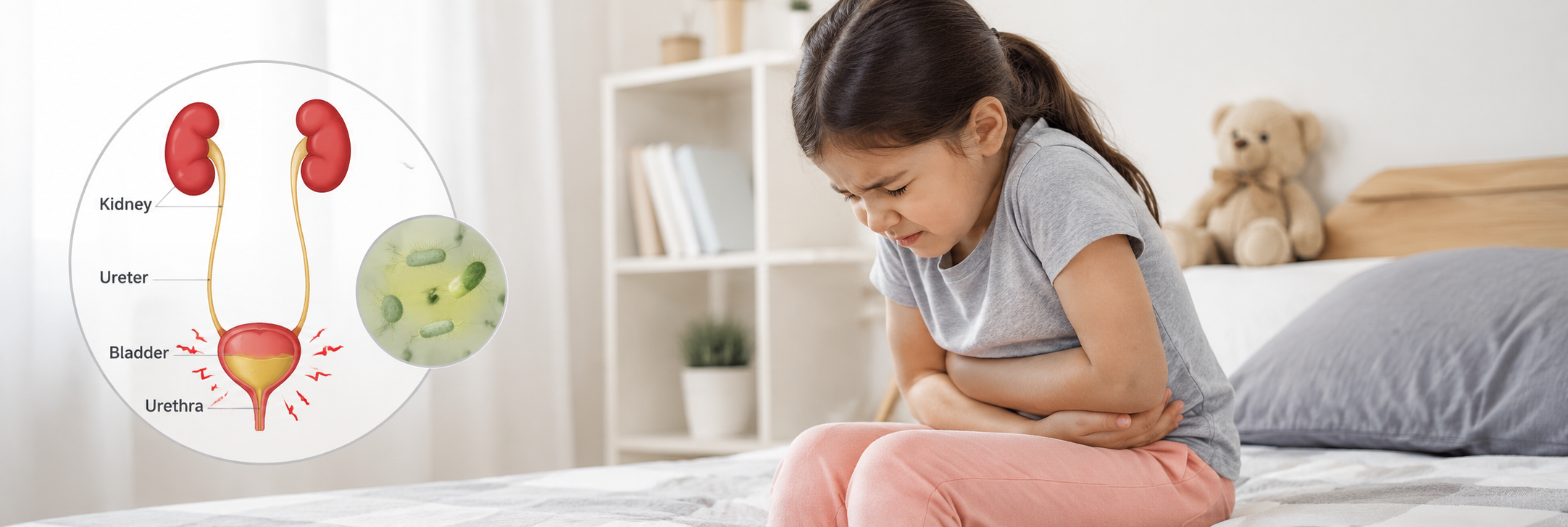
UTIs in Children: Symptoms, Causes, Treatment, and Prevention Guide
Urinary Tract Infections (UTIs) can be uncomfortable and distressing for children, especially when symptoms are difficult for them to explain. UTIs in children are relatively common and may affect the bladder, urethra, or kidneys. Early diagnosis and treatment are important

Vitamin D Deficiency in Kids: Signs, Risks, and Solutions
Vitamin D deficiency in kids is becoming increasingly common due to reduced outdoor activity, limited sun exposure, and dietary gaps in growing children. This essential nutrient plays a key role in bone strength, muscle development, and immunity. When levels are low, children

Otosclerosis in Kids: Causes, Symptoms and Treatment Explained
Otosclerosis is a condition that affects hearing due to abnormal bone growth in the middle ear. Although it is more commonly seen in adults, in rare cases it can also affect children, leading to gradual hearing difficulties. Early recognition of otosclerosis symptoms is important
Dehydration in Children: Symptoms, Stages, and Clinical Care
Dehydration in children can be worrying for parents, especially when symptoms appear suddenly during illness. It happens when a child loses more fluids than they take in, commonly due to fever, vomiting, or diarrhoea. Early signs may include thirst, dry mouth, reduced urine, and