




Categories
What to Do When a Child Has Seizures?
Jan 18, 2025
What to do during a
Seizure?
- Stay calm
- Your calmness can help you respond effectively.
- Ensure the child's safety
- Make the area around the child safe by removing any potentially
harmful objects
- If the child is sitting or standing, gently lay them down on a
flat surface
- Position the child properly
- Place the child in the left
lateral position. This helps prevent aspiration in case the child
vomits
- Loosen tight clothing around the neck or waist to aid breathing
- Avoid common myths
- Do not attempt to open the child’s mouth
- Do not blow air into their mouth
- Do not place objects like keys in their hands or mouth
- Do not restrain the child
- Avoid holding the child’s hands or restricting their movements
during the seizure
- Time the seizure
- Note the time when the seizure begins and monitor its duration
- If the seizure lasts more than 2 minutes, seek immediate medical help
- Contact emergency services
- Call a medical emergency number if the seizure is prolonged or if
the child does not regain consciousness quickly
What to do after a Seizure?
Once the seizure subsides, check the child’s condition:
- If the child becomes conscious and stable, calmly reassure the
child
- If you notice any abnormal symptoms like bleeding, difficulty
breathing, or a delayed recovery, take the child to the nearest hospital
immediately
Our 24/7 Consultant Led Advanced Pediatric Emergency Services are always prepared to handle any health emergency your child may face!
Related BlogView More
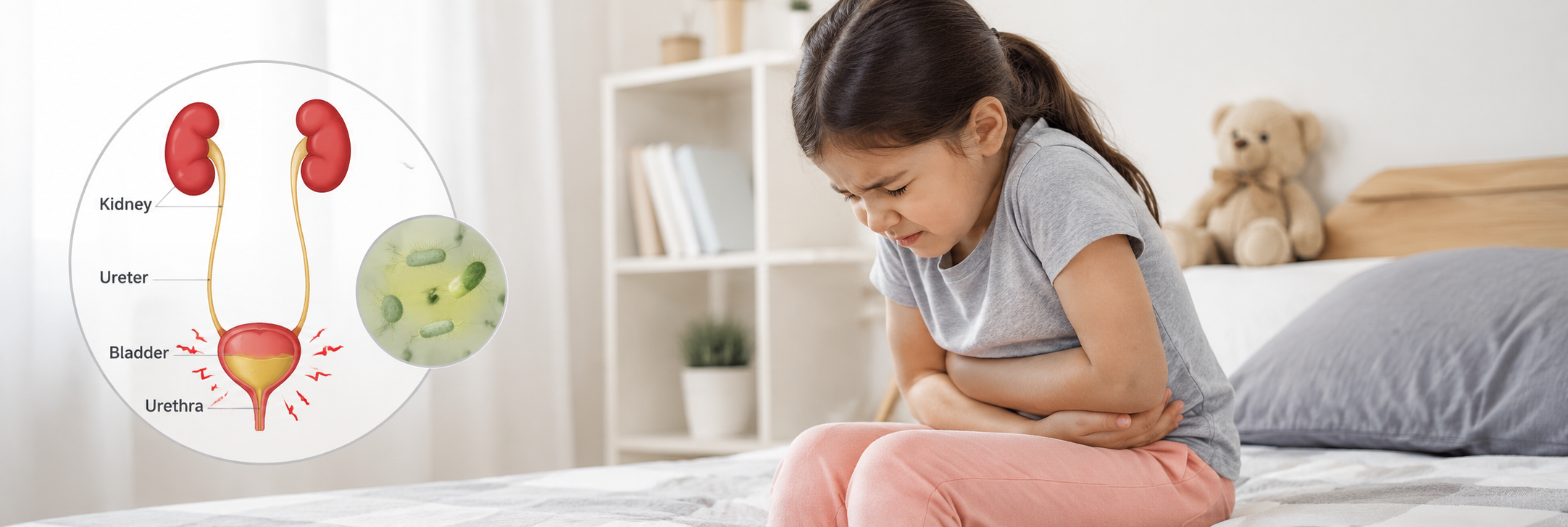
UTIs in Children: Symptoms, Causes, Treatment, and Prevention Guide
Urinary Tract Infections (UTIs) can be uncomfortable and distressing for children, especially when symptoms are difficult for them to explain. UTIs in children are relatively common and may affect the bladder, urethra, or kidneys. Early diagnosis and treatment are important

Otosclerosis in Kids: Causes, Symptoms and Treatment Explained
Otosclerosis is a condition that affects hearing due to abnormal bone growth in the middle ear. Although it is more commonly seen in adults, in rare cases it can also affect children, leading to gradual hearing difficulties. Early recognition of otosclerosis symptoms is important

Vitamin D Deficiency in Kids: Signs, Risks, and Solutions
Vitamin D deficiency in kids is becoming increasingly common due to reduced outdoor activity, limited sun exposure, and dietary gaps in growing children. This essential nutrient plays a key role in bone strength, muscle development, and immunity. When levels are low, children
Dehydration in Children: Symptoms, Stages, and Clinical Care
Dehydration in children can be worrying for parents, especially when symptoms appear suddenly during illness. It happens when a child loses more fluids than they take in, commonly due to fever, vomiting, or diarrhoea. Early signs may include thirst, dry mouth, reduced urine, and