




Categories
What to do when your child has a fall?
Jan 20, 2025
Step 1: Stay Calm and Reassure Your Child
Your first response
should be to reassure and calm your child. A gentle and composed demeanor will
help reduce their anxiety and make it easier to assess their condition.
Step 2: Assess the Injury
Determine if the
injury is to the arm or the leg and observe for signs of pain, swelling, or
difficulty moving the affected area.
If the Arm is Injured:
- Create a simple arm sling using a cloth or a
sheet available at home. This will help immobilize the arm and reduce
pain.
- Administer one dose of syrup paracetamol, if
available, to alleviate discomfort. Be sure to follow the recommended
dosage based on your child’s age and weight.
If the Leg is Injured:
- Keep the leg elevated to minimize swelling.
Ensure your child does not put weight on the injured limb or attempt to
walk.
- Apply ice to the affected area to reduce pain
and swelling.
- Do not give your child anything to eat or
drink. This precaution is important in case medical intervention or a
procedure is required at the hospital.
Step 3: Seek Medical Attention
Even with these
initial measures, it’s crucial to take your child to the nearest hospital if:
- The pain or swelling persists.
- Your child is unable to move the affected arm
or leg.
- There are visible deformities or severe
bruising.
Prompt medical
attention ensures appropriate treatment, whether it’s a simple bandage, a cast,
or further diagnostic procedures.
Always keep a basic first-aid kit and a dose
of child-safe pain relievers at home, and don’t hesitate to seek professional
help if needed. Remember, your calm and quick actions can provide the comfort
and care your child needs.
Our 24/7 Consultant
Led Advanced Pediatric Emergency Services are always prepared to handle any
health emergency your child may face!
Related BlogView More
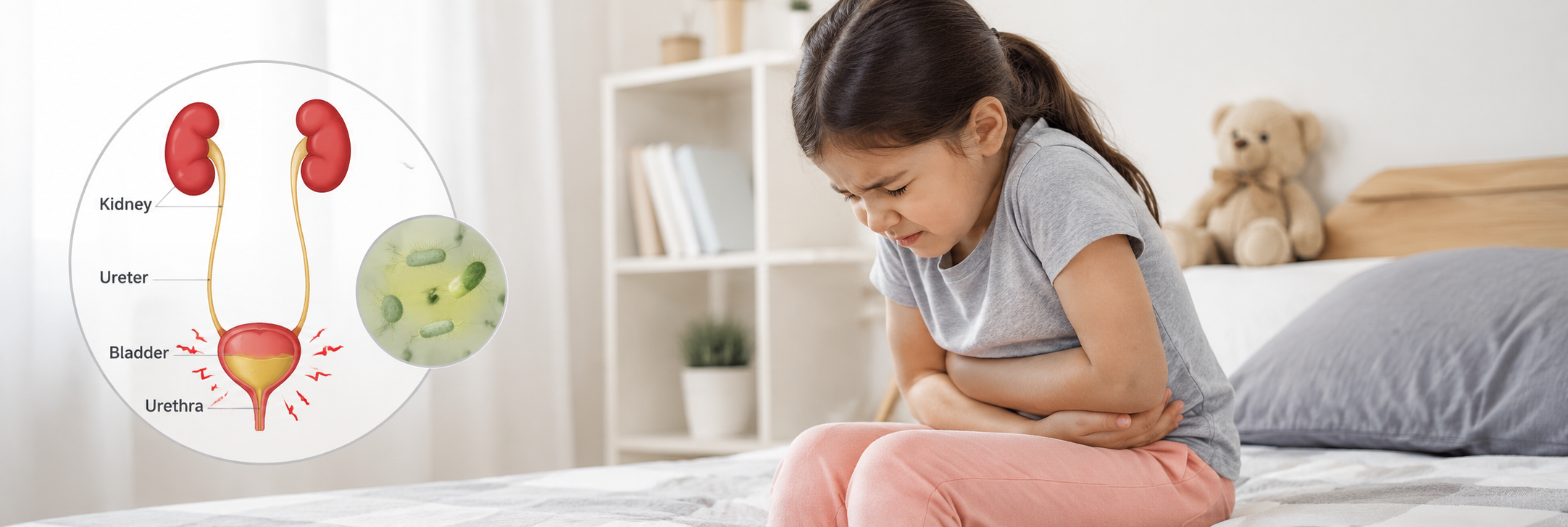
UTIs in Children: Symptoms, Causes, Treatment, and Prevention Guide
Urinary Tract Infections (UTIs) can be uncomfortable and distressing for children, especially when symptoms are difficult for them to explain. UTIs in children are relatively common and may affect the bladder, urethra, or kidneys. Early diagnosis and treatment are important

Vitamin D Deficiency in Kids: Signs, Risks, and Solutions
Vitamin D deficiency in kids is becoming increasingly common due to reduced outdoor activity, limited sun exposure, and dietary gaps in growing children. This essential nutrient plays a key role in bone strength, muscle development, and immunity. When levels are low, children

Otosclerosis in Kids: Causes, Symptoms and Treatment Explained
Otosclerosis is a condition that affects hearing due to abnormal bone growth in the middle ear. Although it is more commonly seen in adults, in rare cases it can also affect children, leading to gradual hearing difficulties. Early recognition of otosclerosis symptoms is important
Dehydration in Children: Symptoms, Stages, and Clinical Care
Dehydration in children can be worrying for parents, especially when symptoms appear suddenly during illness. It happens when a child loses more fluids than they take in, commonly due to fever, vomiting, or diarrhoea. Early signs may include thirst, dry mouth, reduced urine, and