




Abnormal Uterine Bleeding (AUB)
Abnormal uterine bleeding, also called AUB, heavy menstrual bleeding or irregular periods, describes any change in the usual frequency, flow or length of menstrual bleeding in women who are not pregnant. Finding the cause, which doctors group using the PALM-COEIN system, guides the right treatment.

Seamless support from diagnosis to post treatment care
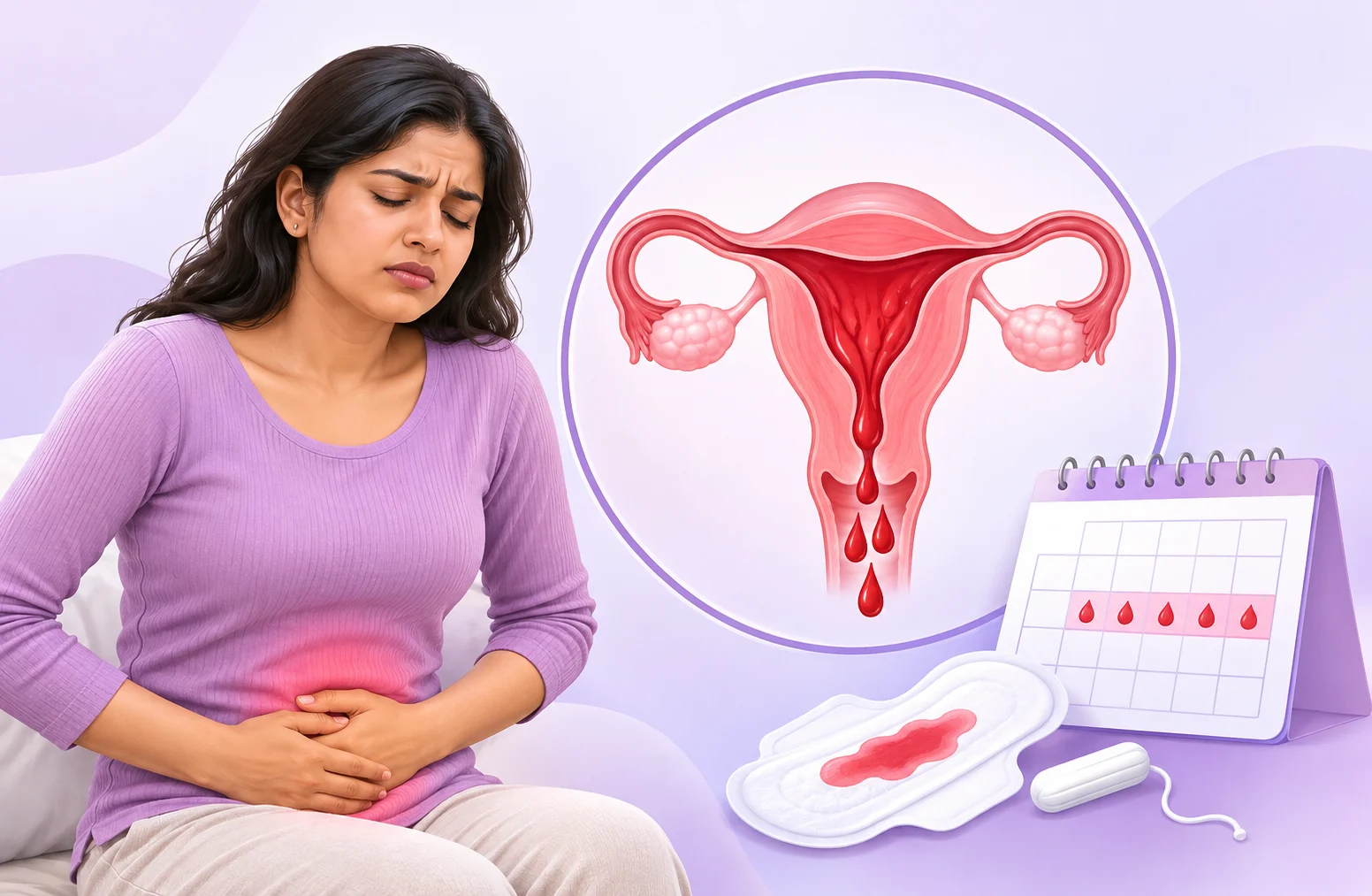
Overview
Menstrual bleeding follows a natural pattern, but it may not always occur at regular intervals or with the same flow and duration. Sometimes, periods become unusually heavy, last longer than expected or occur between cycles. Such changes are known as abnormal uterine bleeding (AUB) and can happen for several reasons, ranging from hormonal changes to conditions affecting the uterus. Understanding these changes can help identify the cause and determine the right treatment.
What Is Abnormal Uterine Bleeding (AUB)?
Abnormal uterine bleeding (AUB) refers to bleeding from the uterus that differs from normal menstrual patterns in terms of frequency, regularity, duration or flow. It may involve:
- Periods that are heavier or last longer than usual.
- Periods that occur too frequently or are widely spaced.
- Bleeding or spotting between periods.
- Bleeding after sexual intercourse.
AUB is classified into two types:
- Chronic AUB: Abnormal uterine bleeding that has been present for most of the preceding six months.
- Acute AUB: An episode of heavy bleeding that requires immediate medical intervention to prevent further blood loss. It may occur on its own or alongside chronic AUB.
Normal vs Abnormal Menstrual Cycle
A normal menstrual cycle follows a relatively predictable pattern. Changes in cycle frequency, regularity, bleeding duration or flow may indicate AUB.
| Menstrual parameter | Normal pattern | Abnormal pattern |
|---|---|---|
| Cycle length | 21–35 days | Less than 21 or more than 35 days |
| Bleeding duration | Up to 7 days | More than 7 days |
| Flow | Not excessively heavy | Heavy bleeding that interferes with daily activities or requires frequent pad changes |
| Bleeding between periods | No bleeding between periods | Spotting or bleeding between periods |
| Bleeding after sex | No bleeding | Bleeding or spotting after sexual intercourse |
This page focuses on bleeding in women of reproductive age who are not pregnant. Bleeding during pregnancy and after menopause requires a separate medical assessment. If you experience either, contact your healthcare provider promptly.
How do the Uterine Lining and Hormones Control Bleeding?
The menstrual cycle is controlled by hormones, mainly estrogen and progesterone. Estrogen helps the lining of the uterus grow each month, while progesterone prepares and maintains it after ovulation (the release of an egg).
If pregnancy does not occur, hormone levels fall, and the uterine lining sheds as a menstrual period.
Sometimes, ovulation does not happen regularly. Without enough progesterone, the lining may continue to build up and shed unpredictably, causing irregular or heavy bleeding.
However, hormonal changes are not the only cause. Fibroids, polyps, problems with blood clotting and certain medicines can also affect menstrual bleeding.
Causes of Abnormal Uterine Bleeding
Doctors use a classification system called PALM-COEIN to identify and group the possible causes of abnormal uterine bleeding (AUB). It divides these causes into two main categories: structural and non-structural.
Before identifying the cause, doctors first rule out pregnancy. A urine or blood pregnancy test may be recommended to exclude pregnancy-related bleeding, as this requires a different evaluation.
PALM (Structural Causes)
These involve physical changes in the uterus that can usually be identified through imaging or examination.
| Letter | Cause | Meaning |
|---|---|---|
| P | Polyp | Growths in the lining of the uterus (endometrial polyps). |
| A | Adenomyosis | Tissue similar to the uterine lining grows into the muscular wall of the uterus. |
| L | Leiomyoma | Also called fibroids, these are non-cancerous growths in the uterus. |
| M | Malignancy and hyperplasia | Cancer or abnormal thickening of the uterine lining. |
COEIN (Non-Structural Causes)
These include conditions that affect menstrual bleeding without necessarily causing visible structural changes in the uterus.
| Letter | Cause | Meaning |
|---|---|---|
| C | Coagulopathy | Disorders that affect the blood's ability to clot. |
| O | Ovulatory dysfunction | Problems with ovulation that can cause irregular or unpredictable bleeding. |
| E | Endometrial causes | Problems with the uterine lining's ability to regulate bleeding. |
| I | Iatrogenic causes | Bleeding caused by medicines, hormonal treatments or contraceptive devices. |
| N | Not otherwise classified | Other less common causes that do not fit into the above categories. |
More than one cause may contribute to abnormal uterine bleeding. Identifying the underlying cause helps your doctor decide which tests and treatments are appropriate.
Who Is at Risk for Abnormal Uterine Bleeding?
Certain health conditions, medicines and hormonal changes can increase the likelihood of AUB. These include:
- PCOS or other conditions that affect ovulation.
- Thyroid disorders.
- Obesity, which can affect hormone balance.
- Being aged 45 or older, when assessment of the uterine lining becomes particularly important.
- Taking blood-thinning medicines or tamoxifen.
- A personal or family history of bleeding disorders.
- Long-term irregular ovulation, which can expose the uterine lining to estrogen without enough progesterone.
Having one or more of these factors does not mean you have a serious condition. It helps your doctor decide whether further tests are needed.
Symptoms of Abnormal Uterine Bleeding
The main symptom of AUB is a change in your usual menstrual bleeding pattern. You may experience:
- Heavy periods that require frequent pad or tampon changes.
- Periods that last longer than usual.
- Bleeding or spotting between periods or after sex.
- Periods that occur too frequently or are unusually far apart.
- Tiredness, dizziness or breathlessness due to blood loss and anaemia (low haemoglobin).
When should you seek medical attention?
Seek urgent medical attention if you are soaking through a pad or tampon every hour for 2 or more hours in a row, particularly if you also feel dizzy, faint, breathless or have chest pain. Severe pelvic pain also needs prompt assessment.
Any bleeding during pregnancy or after menopause should be assessed by a healthcare professional. Do not wait for it to settle on its own.
How Abnormal Uterine Bleeding Is Diagnosed?
Your doctor will review your menstrual history, perform an examination if needed and recommend tests based on your symptoms, age and medical history. Not every woman needs all the tests.
History and Examination
Your doctor may ask about:
- When your periods start and how long they last.
- How heavy the bleeding is and how often you change sanitary protection.
- Bleeding between periods or after sex.
- Your medical history, medicines and contraceptive use.
- Any family history of bleeding disorders.
A pelvic examination may be recommended to check the uterus, cervix and surrounding organs. A pregnancy test is also important for women of reproductive age, as pregnancy-related bleeding requires a different assessment.
Blood Tests
Depending on your symptoms, your doctor may recommend:
- Complete blood count (CBC): Checks haemoglobin levels and helps identify anaemia caused by blood loss.
- Thyroid function tests: Recommended when symptoms suggest a thyroid problem.
- Prolactin testing: May be advised when a hormonal condition affecting ovulation is suspected.
- Blood clotting tests: Considered if you have had heavy periods since they first started or have a personal or family history of bleeding problems.
Imaging and Sampling
- Pelvic ultrasound: Helps identify fibroids, polyps, adenomyosis and other changes in the uterus. A transvaginal ultrasound may provide a clearer view when appropriate.
- Saline infusion sonography or hysteroscopy: These tests help examine the inside of the uterus more closely and identify growths such as polyps or fibroids.
- Endometrial biopsy: A small sample of the uterine lining is examined for abnormal cell changes or cancer. Your doctor may recommend it starting at age 45, or earlier if you have certain risk factors or persistent bleeding.
Your doctor will choose the tests most suitable for your situation.
Possible Complications of Uterine Bleeding
If abnormal uterine bleeding continues without appropriate treatment, it may affect your health and daily life. Possible complications include:
- Iron-deficiency anaemia: Ongoing blood loss can reduce iron levels and haemoglobin, causing tiredness, weakness and breathlessness.
- Fertility difficulties: Some underlying causes, such as PCOS or certain fibroids, may affect ovulation or make it harder to conceive.
- Changes in the uterine lining: Persistent irregular ovulation can lead to an overgrowth of the uterine lining in some women. In certain cases, this can develop into cancer if left untreated.
- Impact on daily life: Heavy or unpredictable bleeding can affect sleep, work, physical activity and emotional wellbeing.
- Severe blood loss: Very heavy bleeding can occasionally cause significant blood loss and require emergency treatment.
Early assessment helps identify the cause and reduce the risk of complications.
Treatment Options for Uterine Bleeding
Treatment for abnormal uterine bleeding (AUB) depends on its underlying cause, severity, age, overall health and future pregnancy plans. The first treatment is usually medicines or a hormonal intrauterine system (IUS), depending on the cause. Your doctor may also recommend a procedure or treatment for an underlying health condition.
Medicines and Hormonal Treatment
- Levonorgestrel-releasing intrauterine system (LNG-IUS): A hormone-releasing device placed inside the uterus that reduces heavy menstrual bleeding. It is a first-line option for suitable women with heavy menstrual bleeding.
- Tranexamic acid: A non-hormonal medicine that reduces blood loss during periods.
- Non-steroidal anti-inflammatory drugs (NSAIDs): Help reduce menstrual bleeding and relieve period pain.
- Combined hormonal contraceptives or progestogens: Help regulate menstrual bleeding, particularly when linked to ovulatory or hormonal problems.
Iron Supplementation and Anaemia Management
Heavy or prolonged bleeding can cause iron deficiency and anaemia (low haemoglobin levels). Your doctor may recommend blood tests and iron supplements to restore iron levels. Iron-rich foods can also support recovery.
Treatment for Acute or Severe Uterine Bleeding
Severe or sudden bleeding may require emergency hospital treatment, which can include:
- Intravenous fluids to stabilise blood circulation.
- Hormonal medicines or tranexamic acid to control bleeding.
- Blood transfusion in cases of severe blood loss, when necessary.
Procedures for Abnormal Uterine Bleeding
If medicines do not control bleeding or a structural problem is identified, your doctor may recommend:
- Hysteroscopic removal: Removes uterine polyps or fibroids inside the uterine cavity.
- Endometrial ablation: Treats the uterine lining to reduce bleeding. It is suitable only for women who do not plan future pregnancies.
- Uterine artery embolisation or myomectomy: Treats fibroids while preserving the uterus.
- Hysterectomy: Removes the uterus and permanently stops uterine bleeding. Pregnancy is no longer possible after this procedure.
Treating the Underlying Cause
If AUB is linked to PCOS, thyroid disorders or bleeding disorders, treating the underlying condition is important. Fibroids, polyps and adenomyosis may require specific medical or surgical treatment depending on their severity.
How Long Does AUB Treatment Take to Work?
The response varies depending on the treatment and underlying cause. Some medicines can reduce bleeding during the current cycle, while hormonal treatments may take several months to show their full benefit. With an LNG-IUS, irregular bleeding may occur initially and improve over time.
Your doctor may recommend a review after three months to assess treatment response and decide whether any changes are needed. Seek medical attention sooner if bleeding becomes severe or your symptoms worsen.
What is the Prognosis (Outlook) for Abnormal Uterine Bleeding?
The outlook for abnormal uterine bleeding is generally good, as many underlying causes can be managed effectively with medicines or procedures.
Your recovery and response to treatment depend on the cause, the amount of blood loss and your overall health. Some women notice improvement within a few menstrual cycles, while others may need longer-term treatment or follow-up.
Regular reviews help your doctor check whether the bleeding has improved, monitor anaemia and adjust treatment if necessary. With appropriate care, most women can manage their symptoms and return to their usual activities.
Questions to Ask Your Gynecologist
Discussing your symptoms and treatment choices with your gynecologist can help you make informed decisions. You may find these questions useful during your appointment.
About the Cause and Tests
- What could be causing my abnormal bleeding?
- Which tests do I need to identify the cause?
- Do I need an ultrasound or a biopsy of the uterine lining?
About Treatment Options
- Which treatment would be most suitable for me?
- What are the benefits and possible risks of each option?
- How long will it take for my bleeding to improve?
About Fertility and Future Plans
- Could the underlying cause affect my chances of pregnancy?
- Which treatment options will allow me to plan a pregnancy in the future?
- Will I need regular follow-up after treatment?
Your doctor can help you understand your diagnosis and choose a treatment plan that considers your health and future plans.
Treatment Options for Abnormal Uterine Bleeding
Not all causes of abnormal uterine bleeding can be prevented. However, certain habits can support your menstrual health and help you identify changes early.
- Maintain a healthy weight: This may help improve hormonal health, particularly if you have PCOS.
- Attend regular check-ups: Routine medical reviews can help identify and manage underlying health conditions.
- Review your medicines with your doctor: Some medicines can affect menstrual bleeding. Do not stop prescribed medicines without medical advice.
- Track your menstrual cycle: Record your period dates, duration and flow to help identify unusual changes.
- Do not ignore persistent changes: Speak to your doctor if your periods become unusually heavy, irregular or prolonged.
These steps can support your overall health, but they do not replace medical assessment when abnormal bleeding occurs.
Why Choose BirthRight by Rainbow Hospitals for Abnormal Uterine Bleeding Care?
At BirthRight by Rainbow Hospitals, we focus on identifying the cause of abnormal uterine bleeding and providing appropriate treatment based on your health and reproductive goals.
- Specialist gynaecological care: Our gynaecology teams assess and manage menstrual disorders and other reproductive health conditions.
- Diagnostic support: We provide access to ultrasound and laboratory investigations to help identify the cause of abnormal bleeding.
- Advanced procedures: We offer gynaecological hysteroscopy and laparoscopy for the evaluation and treatment of suitable conditions.
- Day-care procedures: Selected gynaecological procedures can be performed as day-care treatments, depending on clinical suitability.
- Individualised treatment and follow-up: We guide you through medical and surgical options and help plan ongoing care based on your diagnosis and future pregnancy plans.
Book an appointment with our gynaecology team at BirthRight by Rainbow Hospitals to discuss your symptoms and explore suitable treatment options.

Find a Doctor and Book Appointment Online
Meet our specialist doctors who bring together clinical expertise, compassion, and personalised care to support your health and well-being. Choose from 1,300+ specialists across our network and book an appointment with BirthRight and Rainbow Children Hospitals, offering 24*7 support to you and your family.

Dr. Pranathi Reddy A
Clinical Director – Obstetrics & Gynecology.
English,Hindi,Telugu Banjara Hills

Dr. Gauri Vinayak Dhamangaonkar
Senior Consultant - Fetal Medicine
15 Years English,Hindi,Marathi,Telugu Kondapur OP, Banjara Hills

Dr. Shruthi Reddy Poddutoor
Consultant Obstetrician, Gynecologist & Laparoscopic Surgeon
English,Telugu Banjara Hills

Dr. Himabindu Veerla
Consultant Obstetrician, Gynecologist & Laparoscopic Surgeon
English,Telugu Banjara Hills

Dr. Bhargavi Reddy K
Consultant - Obstetrics and Gynecology
10 Years English,Hindi,Telugu Banjara Hills, Attapur Clinic

Dr. Annie Pranutha P
Consultant Obstetrics and Gynecology
9 Years English,Hindi,Telugu Banjara Hills, Attapur Clinic

Dr. Sasikala Kola
Consultant Obstetrician & Gynecologist
English,Hindi,Telugu Banjara Hills

Dr. Atigadda Vijaya
Consultant - Obstetrics & Gynecology
Hindi,Telugu Banjara Hills, Himayatnagar, Attapur Clinic

Dr. Nishanth Reddy Inavolu
Visiting Consultant Physician and Diabetologist & Internal Medicine
English,Hindi,Telugu Banjara Hills, Himayatnagar

Dr. Tulika Tayal
Consultant - Fetal Medicine
English,Telugu Banjara Hills

Dr. M Prathyusha Reddy
Consultant Obstetrics & Gynecology
English,Telugu Banjara Hills

Dr. Nithya Narasimha Murthy
Consultant -Psychiatrist
English,Hindi,Telugu Kondapur OP, Banjara Hills, Child Development Centre - Banjarahills Rd No 10

Dr. Brundavani
Consultant - Nutritionist
English,Hindi,Telugu Kondapur OP, Hydernagar, Banjara Hills, Child Development Centre - Banjarahills Rd No 10

Dr. Niveditha Chalmeda
Consultant
English,Telugu Banjara Hills

Dr. Kirti Reddy Patlolla
Consultant Obstetrics and Gynaecology
English,Telugu Banjara Hills, Attapur Clinic

Dr. Tuheena Sharma
Consultant - Perinatal Physiotherapy
10 Years English,Telugu Banjara Hills

Dr. Aditi Shah
Consultant - Fetal Medicine
English,Telugu Banjara Hills

Dr. Swathi Naga Tulasi Rayapureddy
Lactation Consultant
8 Years English,Telugu Banjara Hills

Dr. Swetha Reddy. S
CONSULTANT PERINATAL PSYCHIATRIST AND WOMEN MENTAL HEALTH SPECIALIST
13 Years English,Hindi,Telugu Banjara Hills

Dr. Addu Kiranmayi
Chief Clinical Nutritionist and Lifestyle Medicine Consultant
15 Years English,Hindi,Telugu Himayatnagar, Banjara Hills

Dr. Palle Nalini Kumari
Lactation Consultant
17+ Years English,Hindi,Telugu Banjara Hills

Dr. Nazia Tabassum
Consultant - Breast, Plastic & Reconstructive Surgeon
9 Years English,Hindi,Telugu,Urdu Banjara Hills

Dr. Sruthi Cheera
Consultant Breast Surgeon
5 Years English,Hindi,Kannada,Telugu Banjara Hills

Dr. Supriya Reddy
Lactation Consultant
5 Years English,Hindi,Telugu Banjara Hills

Dr. Niraj Krishnamurthy Yanamandra
Senior Consultant Obstetrician & Gynaecologist, Laparoscopy & Hysteroscopy Surgeon
English,Hindi,Marathi,Telugu Hydernagar, Banjara Hills, Financial District

Dr. B. Rao Bahadur
Consultant – Obstetrician & Gynecologist, Laparoscopic ,& Hysteroscopic Surgeon
22 Years English,Hindi,Konkani,Marathi,Telugu Banjara Hills, Kondapur OP

Dr. Sneha Kulkarni
Consultant - Child, Adolescent & Adult Psychiatrist
10 Years English,Hindi,Kannada,Telugu Secunderabad, Banjara Hills, Child Development Centre - Banjarahills Rd No 10

Dr. Lavanya Janagama
Consultant – Obstetrics & Gynecology
10+ Years English Banjara HillsLeading Hospitals for Women Care
Rainbow Children's Hospital stands as a testament to the hospital's continual pursuit of excellence and innovation, providing specialized care for women and children


















chennai
Blogs
Discover our most recent health articles provided by our reliable experts.




What Are People Saying About Us
Embark on a journey of inspiration and hope with our patient success stories, complemented by informative videos from our dedicated doctors.




Media
 Common Gynaecological Surgeries to Fix Female Reproductive Issues
 Healthy Woman - Healthy World
 Healthier Women For a Healthier Future...
 Rainbow Children’s Hospital & BirthRight by Rainbow Launch Video Consultation Facilities
 Dr.Pranthi Reddy
 What is the use of that?
 Can you try this time?
 Pregnant Women are Not Unfit
 Declining Age of Menarche - A Matter of Concern
 Important Facts about Cervical Cancer
 Be careful before preempting
 Flu every month!
 Menstrual cramps
 Premature delivery
 Whether laughing or coughing...why?
 Multi - Tasking may be Cool but it's not Healthy
 Pregnant and Worried about COVID-19? Here's Everything you Need to know
 Video Consultation in Pandamic Situation for Pregnancy Women's
 Women.. Various types of cysts
 Recurrent Pregnancy Loss in Women
 Early Onset of Puberty: Causes, Symptoms and Treatment Options
Common Gynaecological Surgeries to Fix Female Reproductive Issues
Healthy Woman - Healthy World
Healthier Women For a Healthier Future...
FAQs
What causes abnormal uterine bleeding (AUB)?
What is the treatment for abnormal uterine bleeding?
How long can abnormal uterine bleeding last?
What is the first-line treatment for abnormal uterine bleeding?
Can stress cause abnormal uterine bleeding?
Is abnormal uterine bleeding a sign of cancer?
Can abnormal uterine bleeding affect my chances of getting pregnant?
Is it safe to have an IUD fitted if I already have heavy bleeding?
Will I need a hysterectomy for abnormal uterine bleeding?
Quick Links
Free Calculators to Track and Predict your Pregnancy
Gynecologist in Other Locations
Women's Health Conditions We Treat
- Mastitis (Breast Infection)
- PCOS (Polycystic Ovary Syndrome)
- Uterine Fibroids (Leiomyomas)
- Recurrent Pregnancy Loss
- Blocked Fallopian Tubes (Fallopian Tube Obstruction)
- Gestational Diabetes in Pregnancy
- Incompetent Cervix (Cervical Insufficiency)
- COVID-19 in Pregnancy
- Cytomegalovirus (CMV) in Pregnancy
- HELLP Syndrome
- Luteal Phase Defect
- Vasa Previa
- Listeria in Pregnancy
- Placenta Previa
- Endometrial Polyps (Uterine Polyps)
- Congenital Heart Disease in Pregnancy
- Hyperemesis Gravidarum (Severe Morning Sickness)
- Preeclampsia (toxemia)
- Fetal Distress (Non-Reassuring Fetal Status)
- Postpartum Haemorrhage (PPH)
- Placental Abruption (Abruptio Placentae)
- Placenta Accreta
- Postpartum Depression (PPD)
- Rhesus (Rh) Incompatibility
- Syphilis in Women
- Thalassemia in Pregnancy
- Gestational Thrombocytopenia
- Diabetes in Pregnancy
- Uterine Rupture
- Migraine in Pregnancy
- Eclampsia
- Uterine Inversion (Inverted Uterus)
- Rubella in Pregnancy
- Pulmonary Hypertension in Pregnancy
- Hydrops Fetalis (Fetal Hydrops)
- Iron-Deficiency Anaemia in Pregnancy
- Hypothyroidism in Pregnancy
- Pregnancy Constipation
- Retained Placenta
- Antiphospholipid Syndrome (APS)
- Subchorionic Hemorrhage
- Asthma in Pregnancy
- Amniotic Fluid Embolism (AFE)
- Placenta Increta
- Fetal Macrosomia
- Gestational Trophoblastic Disease (GTD)
- Postpartum Psychosis
- Chronic Hypertension in Pregnancy
- Gestational Hypertension
- Oligohydramnios (Low Amniotic Fluid)
- Miscarriage (Spontaneous Abortion)
- Breast Abscess
- Ovarian Cancer
- Placental Insufficiency
- Diarrhoea in Pregnancy
- Chorioamnionitis (Intra-Amniotic Infection)
- Arrhythmias in Pregnancy
- Amenorrhea
- Dysmenorrhea
- Menopause
- Stillbirth