




Chorioamnionitis (Intra-Amniotic Infection)
Chorioamnionitis, also called intra-amniotic infection, is an infection of the membranes and fluid around the baby, usually caused by bacteria travelling up from the vagina during labour or after the water's broken. It needs prompt antibiotics and planned delivery to protect mother and baby.

Seamless support from diagnosis to post treatment care
Overview
Chorioamnionitis is an infection of the membranes and fluid that surround your baby in the womb. It usually happens during labour or after the waters break. The infection needs prompt treatment to protect both mother and baby. With timely antibiotics and delivery, most women and babies recover well.
What Is Chorioamnionitis
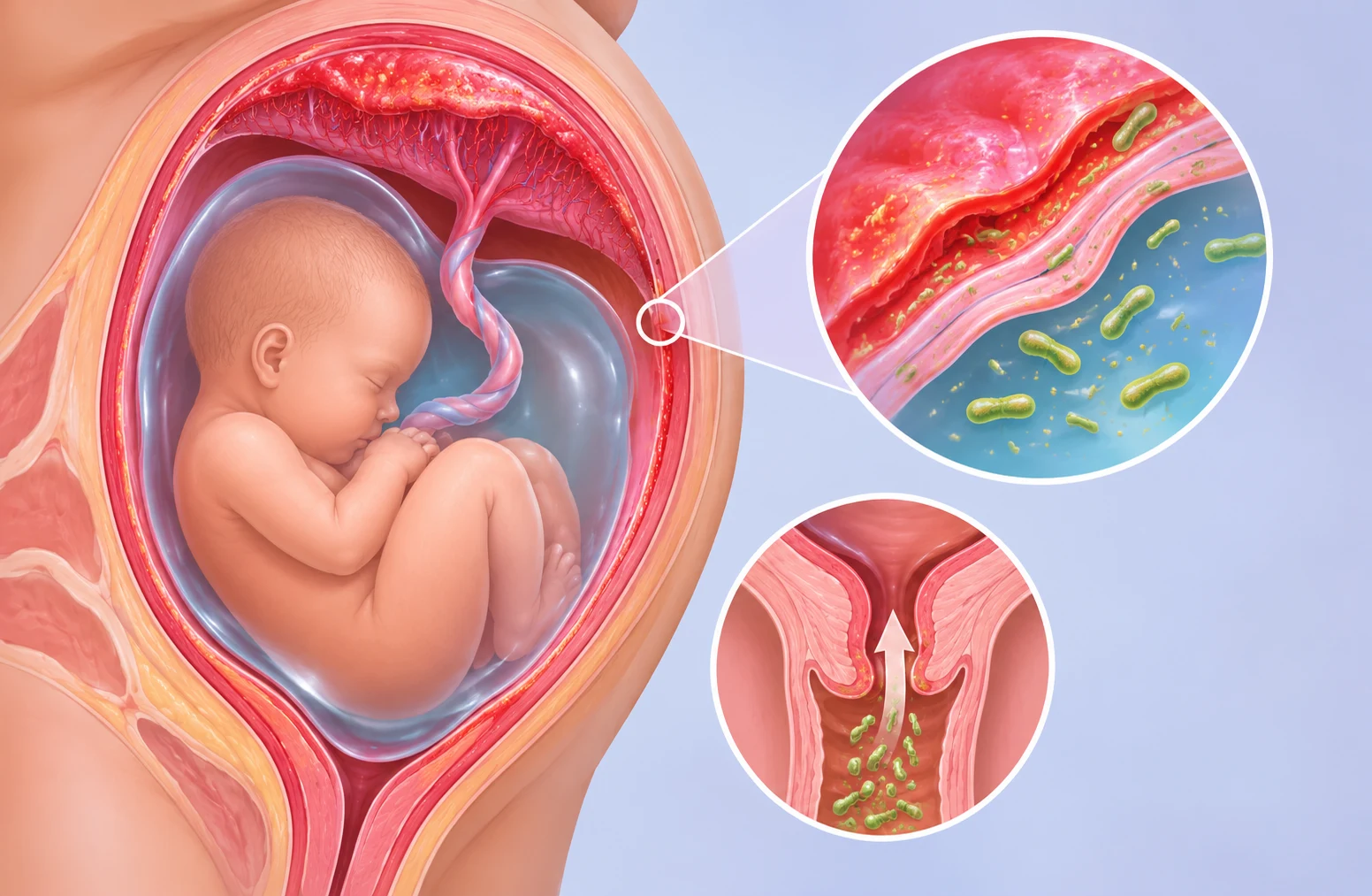
Your baby grows inside a bag of membranes filled with amniotic fluid. Chorioamnionitis is an infection of these membranes, the fluid and sometimes the placenta. Bacteria most often cause it and travel up from the vagina. The infection can start before or during labour.
It is linked with the waters breaking early or with a long labour. It can affect term pregnancies and is more common in preterm births. Doctors treat it quickly because the infection can reach the baby. Prompt care greatly lowers the chance of problems.
Terminology Explained
You may hear several names used for this condition. They describe the same basic problem, which is infection or inflammation around the baby. Knowing the terms can make your care easier to follow.
- Chorioamnionitis: Infection or inflammation of the chorion and amnion, the two membranes around the baby.
- Intra-amniotic infection: The current clinical term, meaning infection within the amniotic sac.
- Amnionitis: A shorter name that points to the amniotic membrane and fluid.
- Intrauterine infection: A broader term for infection inside the womb during pregnancy.
- Triple I: An acronym for Intrauterine Inflammation or Infection or both, introduced by an expert panel in 2015. Doctors use intra-amniotic infection and Triple I today to assess and describe infection or inflammation within the womb.
Some cases are confirmed with a fever and clear signs, and these are called clinical infection. Others are found only on a laboratory test of the placenta after birth, with no symptoms during labour. Your doctor will use the term that fits your situation.
How Infection Develops in the Amniotic Sac
The amniotic sac normally acts as a sealed, sterile barrier around your baby. The membranes and the mucus plug in the cervix keep bacteria out. This protection keeps the fluid and the baby safe through pregnancy. Infection begins when that barrier is crossed.
Most often bacteria travel up from the vagina into the womb. This becomes more likely once the waters break or labour runs long. The infection is usually caused by more than one type of bacterium. Common ones include group B streptococcus along with gut and vaginal organisms.
Causes of Chorioamnionitis
The infection almost always comes from bacteria moving up into the womb. Certain situations make it easier for bacteria to do this. The main causes are set out below.
- Bacteria rising from the vagina: This ascending spread is the usual route into the amniotic sac.
- Waters breaking before or early in labour: The broken membranes remove a key barrier against bacteria.
- A long labour or long time with broken waters: More hours give bacteria more chance to spread upward.
- Existing vaginal or urinary infection: Untreated infections, including group B streptococcus, raise the risk.
In many cases, the mother has done nothing to cause the infection. It can arise even when labour is managed carefully. Finding the cause mainly helps the team judge how quickly to act.
Risk Factors of Chorioamnionitis
Several pregnancy-related, infection-related, and medical factors can increase the risk of chorioamnionitis. Understanding these factors helps your doctor identify when closer monitoring is needed.
| Risk factor | Why it matters |
|---|---|
| Prolonged rupture of membranes (18 hours or more before delivery) | The longer the waters remain broken, the greater the chance of bacteria entering the womb. |
| Prolonged labour | A longer labour is associated with an increased risk of infection. |
| Preterm labour or early rupture of membranes | Both are associated with an increased risk of intra-amniotic infection. |
| Nulliparity (not having given birth previously) | Women who have not previously given birth have a higher risk of developing the condition. |
| Group B streptococcus (GBS) colonisation | These bacteria can travel from the genital tract into the amniotic sac. |
| Bacterial vaginosis or other lower genital tract infections | These conditions can increase the likelihood of bacteria spreading into the womb. |
| Meconium-stained amniotic fluid | The presence of the baby's first stool in the amniotic fluid is associated with an increased risk of infection. |
| Frequent vaginal examinations | Repeated examinations after the waters break may increase the risk of bacterial spread. |
| Internal monitoring during labour | Invasive monitoring procedures are associated with an increased risk of infection. |
| Epidural analgesia | Epidural pain relief is associated with maternal fever, which can make infection harder to distinguish from other causes. |
| Smoking or alcohol use | Studies have associated these habits with an increased risk of chorioamnionitis. |
| Immunosuppression | A weakened immune system may reduce the body's ability to fight infections. |
Having one or more of these risk factors does not necessarily mean you will develop chorioamnionitis. Your doctor assesses your individual risk and monitors you and your baby accordingly.
Symptoms of Chorioamnionitis
Chorioamnionitis symptoms can vary from one woman to another. Some women have mild symptoms or no noticeable signs. In these cases, inflammation may be identified only through a laboratory examination of the placenta and membranes after delivery.
Signs in the Mother
Your doctor may look for the following signs of chorioamnionitis during pregnancy or labour:
- Maternal temperature of 39.0°C (102.2°F) or higher on a single reading, or 38.0–38.9°C that remains elevated when checked again after 30 minutes.
- A maternal heart rate above 100 beats per minute (bpm).
- Tenderness or pain in the womb.
- Foul-smelling amniotic fluid or pus-containing cervical discharge.
- A white blood cell count above 15,000 cells/mm³ without corticosteroid use.
Signs in the Baby
Doctors monitor your baby's wellbeing during pregnancy and labour. Signs that may require further assessment include:
- A foetal heart rate above 160 bpm lasts for 10 minutes or longer (foetal tachycardia).
- Reduced foetal movements, which may indicate that your baby needs further assessment.
Epidural pain relief can sometimes raise your body temperature without an underlying infection. Doctors assess your temperature alongside other clinical findings before making a diagnosis.
Contact your maternity care team promptly if you develop a fever, experience unusual discharge or notice reduced movements in your baby.
Complications for Mother and Baby
Most women and babies do well once treatment begins quickly. Problems are more likely when the infection is not treated in time. The possible complications are described below so you know what the care aims to prevent.
- Need for a caesarean: Labour may not progress well, so a surgical birth is sometimes needed.
- Heavier bleeding after birth: The infection can make the womb contract less firmly afterwards.
- Infection of the womb lining after delivery: This can cause fever and needs further antibiotics.
- Wider infection in the mother: In rare, untreated cases, the infection can spread through the body.
- Early or preterm birth: Infection can prompt labour before the baby is due.
- Infection passed to the baby: The newborn may develop infection and need treatment after birth.
These outcomes are the reason doctors treat the infection without delay. Prompt antibiotics and timely birth reduce these risks. Serious complications are uncommon where good hospital care is available.
Diagnosis of Chorioamnionitis
Doctors diagnose chorioamnionitis by assessing your symptoms, body temperature and other clinical signs during pregnancy or labour. They may also recommend tests to support the diagnosis and assess your baby's health.
The following assessments can help identify the infection:
- Physical examination: Your doctor checks for fever, a fast heartbeat and tenderness of the womb.
- Blood tests: These may help identify signs of infection or inflammation.
- Foetal heart rate monitoring: Your doctor checks your baby's heart rate for abnormalities that may indicate infection.
- Amniotic fluid testing: In selected cases, your doctor may recommend testing the amniotic fluid to look for evidence of infection.
- Placental examination: Laboratory examination of the placenta and membranes after delivery may help confirm inflammation.
Doctors consider these findings together when making a diagnosis. If they suspect chorioamnionitis, they may begin treatment without waiting for all test results.
Treatment Options for Chorioamnionitis
Chorioamnionitis treatment involves hospital-based care with antibiotics, maternal and foetal monitoring, fever management and delivery planning. Doctors begin treatment promptly when they suspect or confirm intra-amniotic infection to reduce the risk of complications for both mother and baby.
Treatment and management of chorioamnionitis may involve the following:
- Intravenous antibiotics: Doctors commonly administer ampicillin and gentamicin through a vein. For women with a mild penicillin allergy, cefazolin may replace ampicillin. In cases of severe penicillin allergy, doctors may use clindamycin or vancomycin alongside gentamicin.
- Planning the birth: Delivery forms an important part of treatment. Your obstetrician determines the timing and method of delivery based on your health, your baby's condition and the progress of labour. Chorioamnionitis alone does not require an emergency caesarean.
- Support during labour: Doctors may provide intravenous fluids and paracetamol to manage fever. Regular monitoring of maternal temperature, heart rate and fetal heart rate helps assess the response to treatment.
- Care for the newborn: The neonatal team assesses your baby after birth for signs of infection. Depending on the baby's condition and risk factors, doctors may recommend observation, blood tests or antibiotics.
- Antibiotics after delivery: You generally do not need further antibiotic doses after a vaginal birth. Following a caesarean, doctors usually administer one additional dose of the antibiotic regimen with appropriate additional bacterial coverage. Longer treatment may be necessary if fever persists, the infection spreads to the bloodstream or other complications develop.
Your care team tailors treatment to your clinical condition, medical history, allergies and your baby's wellbeing. Prompt treatment helps reduce the risk of maternal and newborn complications.
Does Chorioamnionitis Mean a Caesarean?
Many women ask whether this infection means they will need a caesarean. The answer is no, not by itself. A vaginal birth is often still possible and is encouraged where safe.
A caesarean is done only if labour is not progressing or if mother or baby need a quicker birth. An infection alone is not a reason to operate. Your team will guide you towards the right route for your situation.
What Is the Prognosis (Outlook) for Chorioamnionitis?
With prompt treatment, the outlook for both mother and baby is generally good. Recovery depends on the severity of the infection, the stage of pregnancy and how both respond to treatment.
- Recovery for the mother: Most women recover well after treatment. Your doctor monitors your temperature and other signs of infection after delivery. Additional antibiotics may be required if fever persists or a postpartum infection develops.
- Follow-up for the baby: Most babies recover well, especially those born at or near term. Your baby's care may include close monitoring, blood tests and antibiotics if neonatal sepsis is suspected. Babies born prematurely may also need long-term developmental follow-up.
Recovery After Delivery & Future Pregnancy
Having chorioamnionitis once does not mean it will happen again. However, a history of intra-amniotic infection, preterm birth or preterm premature rupture of membranes (PPROM) may increase the risk of complications in a subsequent pregnancy.
Inform your obstetrician about your previous infection when planning another pregnancy. Your doctor may recommend closer monitoring and regular antenatal assessments. Go to the hospital as soon as your water breaks, even if labour has not started. Early assessment following water breaking helps your doctor identify signs of infection and determine the appropriate care.
Questions to Ask Your Doctor
Clear answers can ease worry at a stressful time. Ask your team to explain each step as it happens. The groups below cover the points women most often raise.
About the infection and your baby
- How will this infection affect my baby?
- Will my baby need to go to the newborn unit?
- What signs will you watch for in my baby and me?
- Did I do anything to cause this?
About treatment and birth
- Can I still have a vaginal birth?
- How long will I need antibiotics?
- How will my recovery be checked after delivery?
- Could this happen again in a future pregnancy?
How to Reduce the Risk of Chorioamnionitis
Not every case of chorioamnionitis can be prevented. However, regular antenatal care, timely treatment of infections and safe labour practices can help reduce the risk of infection and related complications.
The following measures support a healthy pregnancy and safer delivery:
- Attend regular antenatal checks: Your doctor may recommend screening for Group B Streptococcus (GBS) between 36 and 37 weeks of pregnancy using a vaginal and rectal swab. Women who test positive generally receive intravenous antibiotics during labour to reduce the risk of GBS infection in their babies.
- Treat vaginal and urinary infections: Early diagnosis and treatment of bacterial vaginosis and urinary tract infections (UTIs) are important during pregnancy. Inform your doctor if you experience unusual vaginal discharge, itching or a burning sensation while passing urine.
- Seek immediate care when your water breaks: Go to the hospital as soon as your water breaks, especially before 37 weeks of pregnancy, even if contractions have not started.
- Receive preventive antibiotics when indicated: If your water breaks before 37 weeks and before labour begins, known as preterm prelabour rupture of membranes (PPROM), your doctor may prescribe latency antibiotics such as ampicillin and erythromycin. In suitable cases, these medicines help reduce infection risk and prolong pregnancy.
- Avoid unnecessary vaginal examinations: Your maternity team limits digital vaginal examinations after the amniotic membranes rupture and uses appropriate sterile techniques during necessary examinations and procedures.
- Avoid smoking during pregnancy: Quitting smoking helps reduce the risk of premature rupture of membranes, preterm birth and other pregnancy complications.
Chorioamnionitis can develop even when you follow all recommended precautions. Regular antenatal care and timely medical attention help your doctor identify potential complications and provide appropriate treatment.
Why Choose BirthRight by Rainbow Hospitals for Chorioamnionitis Treatment & Care?
Chorioamnionitis requires coordinated obstetric and neonatal care to manage maternal infection and reduce the risk of newborn complications. At BirthRight by Rainbow Hospitals, our maternity services include high-risk pregnancy management, labour and delivery care and neonatal support.
Our facilities in Hyderabad include:
- 24/7 specialist care: Our Secunderabad centre provides round-the-clock obstetric, anaesthesia and neonatal team coverage.
- Neonatal intensive care: Our Secunderabad and LB Nagar centres have Level III Neonatal Intensive Care Units (NICUs) to support newborns requiring intensive care.
- Care for preterm babies: Our LB Nagar centre provides neonatal care for premature babies, low birth weight infants and critically ill newborns.
- High-risk pregnancy management: Our Secunderabad centre provides high-risk obstetric care, fetal medicine specialist services and a dedicated Maternal Intensive Care Unit (MICU).
- Emergency care: Our Hyderabad hospitals at Secunderabad, LB Nagar, Hydernagar and Financial District provide round-the-clock emergency services.
If you develop a fever, notice foul-smelling vaginal discharge or your water breaks, visit the nearest maternity emergency department or labour ward immediately. You can also contact BirthRight by Rainbow Hospitals on 1800 2122 for assistance.
For routine antenatal consultations or follow-up care, book an appointment with an obstetrician at your nearest BirthRight centre.

Find a Doctor and Book Appointment Online
Meet our specialist doctors who bring together clinical expertise, compassion, and personalised care to support your health and well-being. Choose from 1,300+ specialists across our network and book an appointment with BirthRight and Rainbow Children Hospitals, offering 24*7 support to you and your family.

Dr. Pranathi Reddy A
Clinical Director – Obstetrics & Gynecology.
English,Hindi,Telugu Banjara Hills

Dr. Gauri Vinayak Dhamangaonkar
Senior Consultant - Fetal Medicine
15 Years English,Hindi,Marathi,Telugu Kondapur OP, Banjara Hills

Dr. Shruthi Reddy Poddutoor
Consultant Obstetrician, Gynecologist & Laparoscopic Surgeon
English,Telugu Banjara Hills

Dr. Himabindu Veerla
Consultant Obstetrician, Gynecologist & Laparoscopic Surgeon
English,Telugu Banjara Hills

Dr. Bhargavi Reddy K
Consultant - Obstetrics and Gynecology
10 Years English,Hindi,Telugu Banjara Hills, Attapur Clinic

Dr. Annie Pranutha P
Consultant Obstetrics and Gynecology
9 Years English,Hindi,Telugu Banjara Hills, Attapur Clinic

Dr. Sasikala Kola
Consultant Obstetrician & Gynecologist
English,Hindi,Telugu Banjara Hills

Dr. Atigadda Vijaya
Consultant - Obstetrics & Gynecology
Hindi,Telugu Banjara Hills, Himayatnagar, Attapur Clinic

Dr. Nishanth Reddy Inavolu
Visiting Consultant Physician and Diabetologist & Internal Medicine
English,Hindi,Telugu Banjara Hills, Himayatnagar

Dr. Tulika Tayal
Consultant - Fetal Medicine
English,Telugu Banjara Hills

Dr. M Prathyusha Reddy
Consultant Obstetrics & Gynecology
English,Telugu Banjara Hills

Dr. Nithya Narasimha Murthy
Consultant -Psychiatrist
English,Hindi,Telugu Kondapur OP, Banjara Hills, Child Development Centre - Banjarahills Rd No 10

Dr. Brundavani
Consultant - Nutritionist
English,Hindi,Telugu Kondapur OP, Hydernagar, Banjara Hills, Child Development Centre - Banjarahills Rd No 10

Dr. Niveditha Chalmeda
Consultant
English,Telugu Banjara Hills

Dr. Kirti Reddy Patlolla
Consultant Obstetrics and Gynaecology
English,Telugu Banjara Hills, Attapur Clinic

Dr. Tuheena Sharma
Consultant - Perinatal Physiotherapy
10 Years English,Telugu Banjara Hills

Dr. Aditi Shah
Consultant - Fetal Medicine
English,Telugu Banjara Hills

Dr. Swathi Naga Tulasi Rayapureddy
Lactation Consultant
8 Years English,Telugu Banjara Hills

Dr. Swetha Reddy. S
CONSULTANT PERINATAL PSYCHIATRIST AND WOMEN MENTAL HEALTH SPECIALIST
13 Years English,Hindi,Telugu Banjara Hills

Dr. Addu Kiranmayi
Chief Clinical Nutritionist and Lifestyle Medicine Consultant
15 Years English,Hindi,Telugu Himayatnagar, Banjara Hills

Dr. Palle Nalini Kumari
Lactation Consultant
17+ Years English,Hindi,Telugu Banjara Hills

Dr. Nazia Tabassum
Consultant - Breast, Plastic & Reconstructive Surgeon
9 Years English,Hindi,Telugu,Urdu Banjara Hills

Dr. Sruthi Cheera
Consultant Breast Surgeon
5 Years English,Hindi,Kannada,Telugu Banjara Hills

Dr. Supriya Reddy
Lactation Consultant
5 Years English,Hindi,Telugu Banjara Hills

Dr. Niraj Krishnamurthy Yanamandra
Senior Consultant Obstetrician & Gynaecologist, Laparoscopy & Hysteroscopy Surgeon
English,Hindi,Marathi,Telugu Hydernagar, Banjara Hills, Financial District

Dr. B. Rao Bahadur
Consultant – Obstetrician & Gynecologist, Laparoscopic ,& Hysteroscopic Surgeon
22 Years English,Hindi,Konkani,Marathi,Telugu Banjara Hills, Kondapur OP

Dr. Sneha Kulkarni
Consultant - Child, Adolescent & Adult Psychiatrist
10 Years English,Hindi,Kannada,Telugu Secunderabad, Banjara Hills, Child Development Centre - Banjarahills Rd No 10

Dr. Lavanya Janagama
Consultant – Obstetrics & Gynecology
10+ Years English Banjara HillsLeading Hospitals for Women Care
Rainbow Children's Hospital stands as a testament to the hospital's continual pursuit of excellence and innovation, providing specialized care for women and children


















chennai
Blogs
Discover our most recent health articles provided by our reliable experts.




What Are People Saying About Us
Embark on a journey of inspiration and hope with our patient success stories, complemented by informative videos from our dedicated doctors.




Media
 Common Gynaecological Surgeries to Fix Female Reproductive Issues
 Healthy Woman - Healthy World
 Healthier Women For a Healthier Future...
 Rainbow Children’s Hospital & BirthRight by Rainbow Launch Video Consultation Facilities
 Dr.Pranthi Reddy
 What is the use of that?
 Can you try this time?
 Pregnant Women are Not Unfit
 Declining Age of Menarche - A Matter of Concern
 Important Facts about Cervical Cancer
 Be careful before preempting
 Flu every month!
 Menstrual cramps
 Premature delivery
 Whether laughing or coughing...why?
 Multi - Tasking may be Cool but it's not Healthy
 Pregnant and Worried about COVID-19? Here's Everything you Need to know
 Video Consultation in Pandamic Situation for Pregnancy Women's
 Women.. Various types of cysts
 Recurrent Pregnancy Loss in Women
 Early Onset of Puberty: Causes, Symptoms and Treatment Options
Common Gynaecological Surgeries to Fix Female Reproductive Issues
Healthy Woman - Healthy World
Healthier Women For a Healthier Future...
FAQs
Is chorioamnionitis dangerous for my baby?
Can chorioamnionitis happen without obvious symptoms?
Did a vaginal infection cause my chorioamnionitis?
Will I definitely need a caesarean?
Could chorioamnionitis affect my baby’s long-term development?
Can I get an infection myself after delivery?
Will this happen again in my next pregnancy?
Did I do something to cause this infection?
I have a fever in labour. Does that mean I have chorioamnionitis?
Will I be able to breastfeed after this infection?
Quick Links
Free Calculators to Track and Predict your Pregnancy
Gynecologist in Other Locations
Women's Health Conditions We Treat
- Mastitis (Breast Infection)
- PCOS (Polycystic Ovary Syndrome)
- Uterine Fibroids (Leiomyomas)
- Recurrent Pregnancy Loss
- Blocked Fallopian Tubes (Fallopian Tube Obstruction)
- Gestational Diabetes in Pregnancy
- Incompetent Cervix (Cervical Insufficiency)
- COVID-19 in Pregnancy
- Cytomegalovirus (CMV) in Pregnancy
- HELLP Syndrome
- Luteal Phase Defect
- Vasa Previa
- Listeria in Pregnancy
- Placenta Previa
- Endometrial Polyps (Uterine Polyps)
- Congenital Heart Disease in Pregnancy
- Hyperemesis Gravidarum (Severe Morning Sickness)
- Preeclampsia (toxemia)
- Fetal Distress (Non-Reassuring Fetal Status)
- Postpartum Haemorrhage (PPH)
- Placental Abruption (Abruptio Placentae)
- Placenta Accreta
- Postpartum Depression (PPD)
- Rhesus (Rh) Incompatibility
- Syphilis in Women
- Thalassemia in Pregnancy
- Gestational Thrombocytopenia
- Diabetes in Pregnancy
- Uterine Rupture
- Migraine in Pregnancy
- Eclampsia
- Uterine Inversion (Inverted Uterus)
- Rubella in Pregnancy
- Pulmonary Hypertension in Pregnancy
- Hydrops Fetalis (Fetal Hydrops)
- Iron-Deficiency Anaemia in Pregnancy
- Hypothyroidism in Pregnancy
- Pregnancy Constipation
- Retained Placenta
- Antiphospholipid Syndrome (APS)
- Subchorionic Hemorrhage
- Asthma in Pregnancy
- Amniotic Fluid Embolism (AFE)
- Placenta Increta
- Fetal Macrosomia
- Gestational Trophoblastic Disease (GTD)
- Postpartum Psychosis
- Chronic Hypertension in Pregnancy
- Gestational Hypertension
- Oligohydramnios (Low Amniotic Fluid)
- Miscarriage (Spontaneous Abortion)
- Breast Abscess
- Ovarian Cancer