





Endometrial Polyps (Uterine Polyps): Symptoms, Causes and Treatment
The lining of the uterus changes throughout the menstrual cycle in response to hormones. Sometimes, a small area of this tissue grows more than usual and forms an endometrial polyp, also called a uterine polyp. A scan may find it after symptoms such as heavy or irregular bleeding, or it may be discovered even when there are no noticeable symptoms.
Most endometrial polyps are non-cancerous, but whether they need treatment depends on factors such as their size, symptoms and your individual circumstances. Understanding what an endometrial polyp is and how it develops is the first step towards knowing what it may mean for your health.
What is an Endometrial Polyp (Uterine Polyp)?
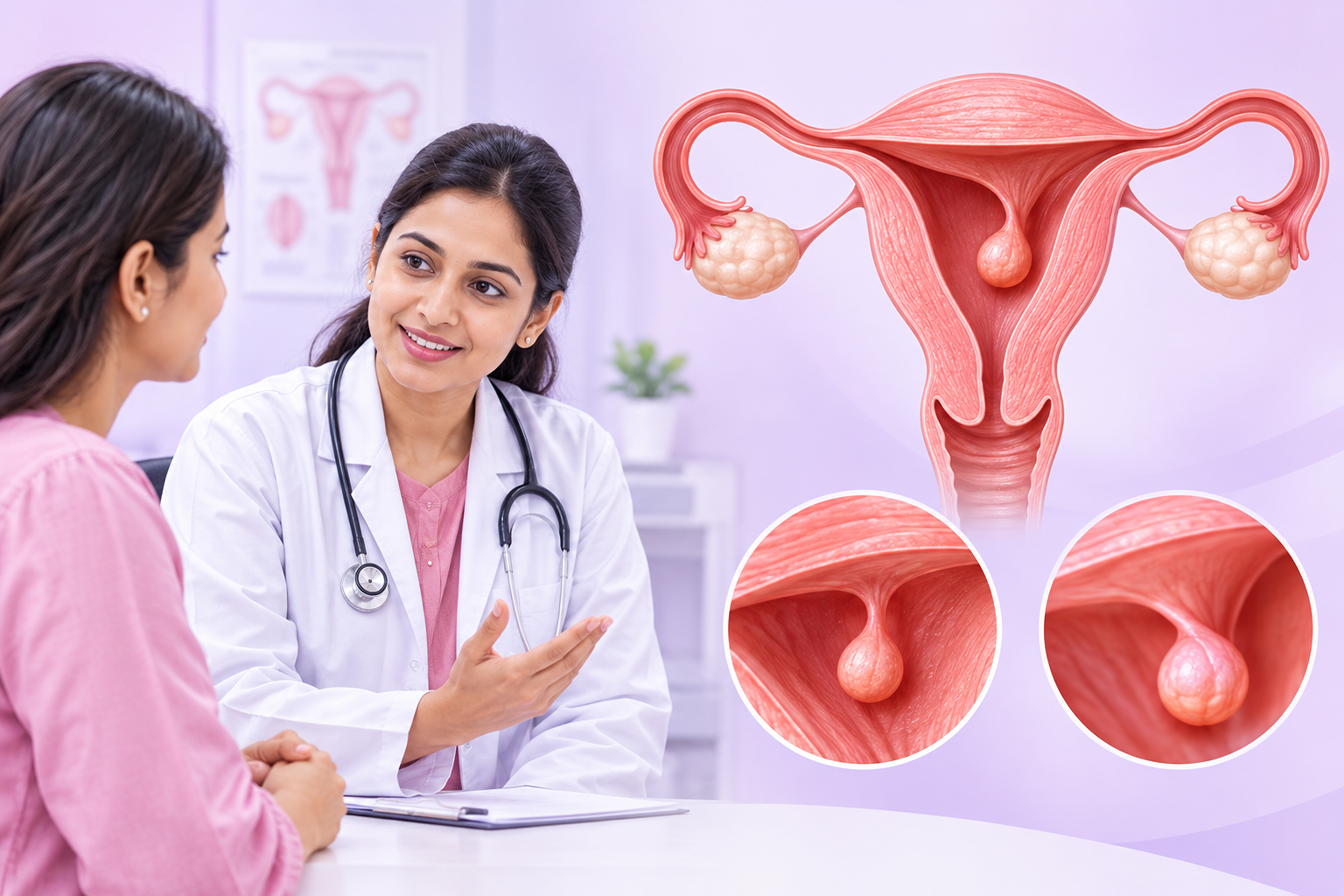
An endometrial polyp is a growth that develops from the inner lining of the uterus, called the endometrium. It grows into the uterine cavity and can be attached to the lining by a thin stalk or a broad base.
Polyps can vary in size, from a few millimetres to several centimetres. Most are non-cancerous, although your doctor may recommend further assessment in some cases, particularly if you have symptoms or have gone through menopause.
How Do Endometrial Polyps Form in the Uterus?
- Localised Overgrowth: The womb lining naturally thickens and sheds during each menstrual cycle. An endometrial polyp forms when a small area of this lining grows more than the surrounding tissue.
- Hormonal Influence: Oestrogen helps the womb lining grow during the menstrual cycle. Its effect on the lining is thought to play an important role in the development of endometrial polyps.
- Hormonal Changes Around Menopause: Changes in hormone levels around menopause may help explain why doctors find endometrial polyps more often during this stage of life.
- Other Contributing Factors: Hormones are not the only influence. Other factors can also increase a woman's likelihood of developing endometrial polyps.
Causes of Endometrial Polyps
The exact cause of endometrial polyps is not fully understood. Hormones, particularly oestrogen, are thought to play a role by encouraging the uterine lining to grow. This may cause a small area of the lining to grow more than usual and form a polyp.
Endometrial polyps are not caused by anything a woman has done. Diet, physical activity and stress are not known to cause these growths. Age and hormonal changes can influence the likelihood of developing them, along with other risk factors.
Risk Factors of Endometrial Polyps
Some women are more likely to develop endometrial polyps than others, mostly linked to hormones and age. Knowing these helps your doctor judge your risk. The main risk factors are below.
- Being aged 40 to 50: Polyps are most common in the years approaching menopause.
- Being overweight: A higher body weight raises oestrogen levels, which is linked with polyps.
- High blood pressure: Raised blood pressure is associated with a higher chance of polyps.
- Tamoxifen: This breast cancer medicine acts on the womb lining and raises the risk.
- Hormone replacement therapy: Some forms of HRT can increase the chance of polyps.
- Certain genetic syndromes: Conditions such as Lynch and Cowden syndrome carry a higher risk.
Having a risk factor does not mean you will develop a polyp, and many women with polyps have none of them. These simply point to who may benefit from closer attention. If you notice abnormal bleeding, it is worth getting checked, whatever your risk.
Symptoms of Endometrial Polyps
Many endometrial polyps cause no symptoms at all and are found by chance during a scan. When they do cause problems, the most common sign is a change in bleeding. The possible endometrial polyp symptoms are below.
- Irregular periods: Bleeding that is unpredictable or comes between periods.
- Heavy or long periods: Periods that are heavier or last longer than usual.
- Bleeding after menopause: Any bleeding or spotting after menopause should always be checked.
- Bleeding after sex: Spotting or bleeding after intercourse.
- Difficulty conceiving: In some women, polyps are linked with trouble getting pregnant.
Complications of Endometrial Polyps
Most endometrial polyps are harmless and cause no lasting problems. The concerns below are less common and explain why some polyps are removed or monitored. The main ones are below.
- Ongoing abnormal bleeding: Polyps can cause bleeding that disrupts daily life and leads to anaemia.
- Difficulty getting pregnant: Some polyps can affect fertility, and removing them may help.
- A small risk of cancer: A small number of polyps contain abnormal or cancerous cells.
99% of endometrial polyps are benign in reproductive age group though the individual risk varies. According to a large study done on 35,000 women, 1.1% is the estimated prevalence of malignancy in premenopausal women, compared to 4.9% in postmenopausal women.
Treatment Options for Endometrial Polyps
Treatment for endometrial polyps depends on your symptoms, age, and risk factors. Not every polyp needs removal, your doctor will choose the right option. The main treatment options for endometrial polyps are below.
- Watchful waiting (monitoring): A small polyp with no symptoms may simply be monitored, as some resolve on their own.
- Hysteroscopic polypectomy: The main treatment, where the polyp is removed through the vagina using a thin camera, with no cut on the abdomen.
- Sending the polyp for testing: The removed polyp is checked under a microscope to confirm if it is benign.
- Treating any linked problem: Anaemia from heavy bleeding or fertility concerns are managed alongside.
Some small endometrial polyps may go away on their own, particularly in women who have no symptoms, so your doctor may recommend monitoring them for a period of time. If a polyp is causing abnormal bleeding, is found after menopause, or has features that need further assessment, removal may be recommended. Your doctor will consider your symptoms, age, the polyp’s size and appearance, and other factors when deciding the best approach.
What is the Prognosis (Outlook) for Endometrial Polyps?
The outlook for endometrial polyps is very good, as the large majority are benign and easily treated. When a polyp is removed, symptoms such as abnormal bleeding usually settle. Recovery is quick, and most women return to normal within a day or two.
Endometrial polyps can sometimes come back after treatment, so your doctor may recommend follow-up based on your individual situation. If a polyp is being monitored, report any new or changes in bleeding to your doctor. With appropriate treatment and follow-up when needed, most women do well.
What Questions Should I Ask My Doctor?
The questions you may want to ask can change depending on whether the polyp has just been found, is causing symptoms, or needs treatment. You can group them by stage:
If an endometrial polyp has just been diagnosed incidentally without any symptoms:
- Do I need treatment now, or can we monitor it?
If you have symptoms or fertility concerns:
- Could the polyp be causing my bleeding or other symptoms?
- Could it affect my chances of becoming pregnant?
- Are any further tests needed before deciding on treatment?
If your doctor recommends removal:
- Why do you recommend removing the polyp?
- What does the removal procedure involve?
- Will I need anaesthesia or a hospital stay?
- Will the removed tissue be sent for testing?
After treatment or removal:
- How long will recovery take?
- What symptoms should I watch for after the procedure?
- How likely is the polyp to return?
- Will I need a follow-up scan or appointment?
Writing your questions down makes it less likely you'll forget them on the day. A clear conversation helps you feel more in control of your care. Your doctor can explain things at your own pace.
Can Endometrial Polyps Be Prevented?
Endometrial polyps cannot always be prevented, as they are largely driven by hormones and age. Even so, a few steps support your overall health and help catch any problem early. The practical points below help.
- Report abnormal bleeding: Tell your doctor promptly about any irregular, heavy, or postmenopausal bleeding.
- Keep up regular checkups: Routine gynaecological visits help find problems early.
- Maintain a healthy weight: A healthy weight helps keep oestrogen levels balanced.
- Review long-term medicines: If you take tamoxifen or HRT, your doctor will monitor you as needed.
Note: If you notice unusual or persistent changes in your bleeding, speak to your doctor so they can assess the cause and recommend appropriate care.
Why Choose BirthRight by Rainbow Hospitals for Endometrial Polyp Care?
BirthRight by Rainbow Hospitals brings together experienced gynaecologists and a full women’s health team, backed by three decades of expertise in women’s and children’s health. Endometrial polyps need accurate diagnosis and, where needed, skilled minimally invasive surgical removal, and our teams are set up for both. From the scan that finds a polyp to its removal and testing, we explain everything clearly at every step.
Because polyps can affect bleeding and sometimes fertility, our teams link your care with wider gynaecology and fertility support when you need it. This means we handle any related concern in one place. The aim throughout is an accurate diagnosis, the right treatment and reassurance along the way.