




Listeria in Pregnancy: Symptoms, Risks and Prevention
Pregnancy often brings extra attention to what you eat, especially if you later realise that a food may carry an infection risk. Listeria is a type of bacteria that can be found in certain foods, and pregnancy can make women more vulnerable to infection.
Listeriosis may cause only mild symptoms in the mother, but it can have a greater effect on the pregnancy, which is why recognising possible exposure and knowing when to seek medical advice matters. Understanding what listeria is and how the infection can affect pregnancy is a useful place to begin.
What is Listeria in Pregnancy?
Listeria is a bacterium that can contaminate certain foods and cause an infection called listeriosis. In most healthy adults, it causes little more than a mild upset, but in pregnancy it is taken seriously because it can reach the baby. A listeria infection during pregnancy can cross the placenta even when the mother feels only slightly unwell.
What makes listeriosis pregnancy risk different is how much more likely pregnant women are to be affected. According to the FDA, pregnant women are about 10 times more likely than other adults to get a listeria infection. This is why food safety advice in pregnancy focuses so strongly on the foods that can carry this particular bacteria.
Why Does Pregnancy Increase the Risk of Listeria Infection?
Pregnancy naturally changes how the immune system works. The body slightly lowers some of its defences so that it does not reject the growing baby, which is a normal and healthy adjustment. The trade-off is that pregnant women are a little less able to fight off certain infections, including listeria.
This is why a bacterium that most people shrug off can take hold more easily in pregnancy. It also explains why the same careful food habits are advised for every pregnant woman, not only those who feel unwell. The change in immunity is temporary and returns to normal after the baby is born.
Causes of Listeria in Pregnancy
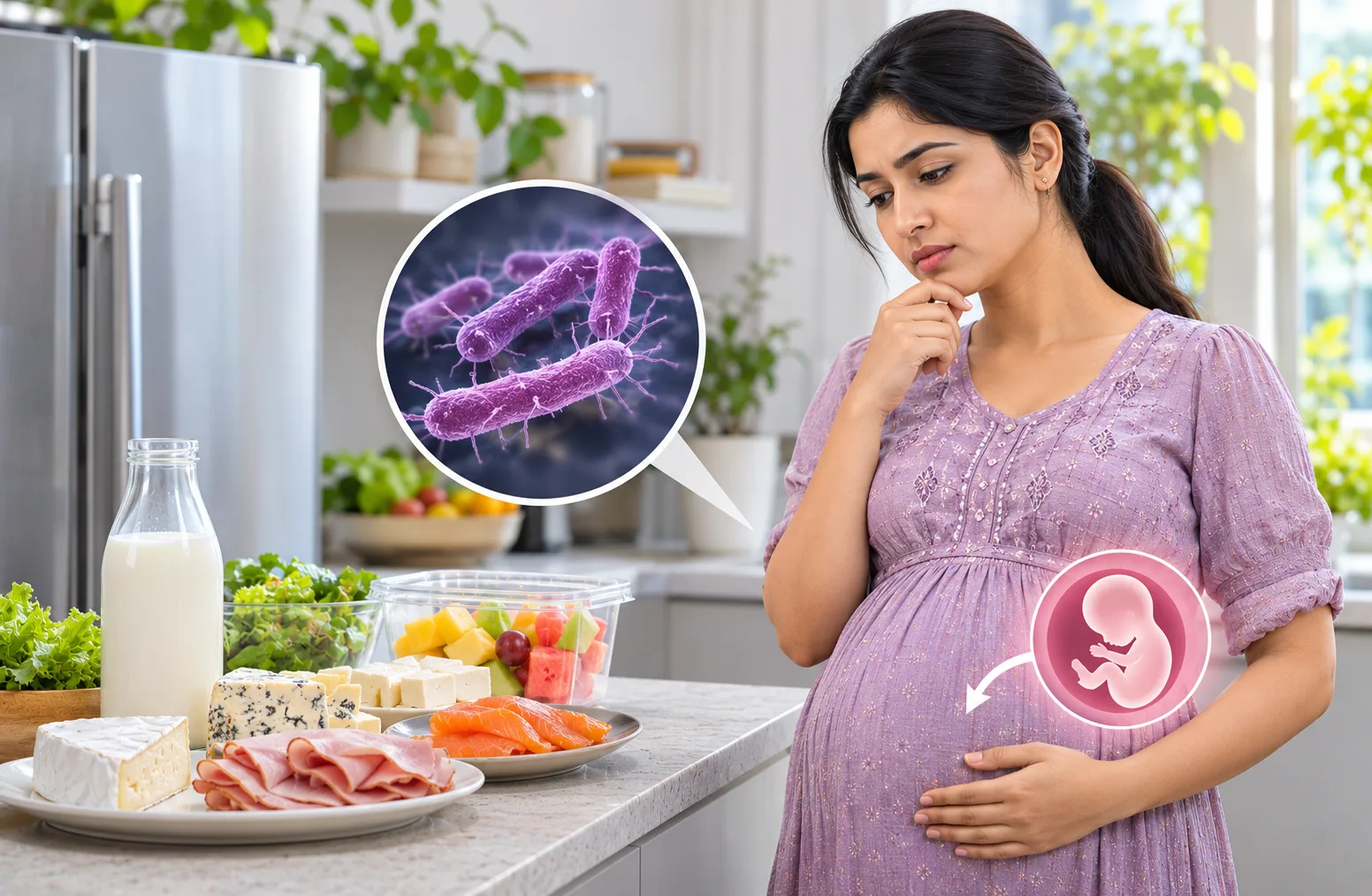
The main cause of listeria in pregnancy is eating food contaminated with the listeria bacteria. Unlike many germs, listeria can grow even in the fridge, which is why certain chilled and ready-to-eat foods carry more risk. The common sources are below.
- Unpasteurised or raw milk: Milk that has not been pasteurised, and products made from it, can carry listeria, so milk should be boiled or pasteurised.
- Soft cheeses: Soft cheeses such as feta, brie and some fresh cheeses made from unpasteurised milk are higher risk.
- Cut fruit and unwashed produce: Pre-cut fruit, salads and raw vegetables that are not washed well can carry the bacteria.
- Cold cooked and deli meats: Cold or ready-to-eat meats that are not reheated until steaming hot.
- Chilled smoked fish: Refrigerated smoked or raw fish such as some packaged seafood.
- Leftovers and ready meals: Food left too long or not reheated thoroughly before eating.
The pregnancy risk from listeria is highest with foods eaten cold and stored for a while. In India, loose or unpasteurised milk is a common source, so boiling milk well is an easy and important step. Cooking and reheating food until steaming hot kills the bacteria.
Risk Factors for Listeria Infection During Pregnancy
Every pregnant woman is more at risk of listeria than she would be otherwise, but some situations raise the chance further. These relate mostly to the foods eaten and how they are stored. The main risk factors are below.
- Eating high-risk foods: Regularly eating unpasteurised dairy, cold meats or unwashed produce raises the chance of exposure.
- Weakened immunity: Conditions or medicines that lower immunity add to the risk already present in pregnancy.
- Poor food storage: Keeping food too long or storing it at the wrong fridge temperature lets bacteria grow.
- Eating out often: Food prepared in unknown conditions can carry a higher risk if not freshly cooked.
Having a risk factor does not mean you will get an infection, as listeriosis remains uncommon overall. The point is simply that a few sensible food habits remove most of the risk. The prevention section sets these out clearly.
Warning Signs and Symptoms of Listeria in Pregnancy
Listeria causes only mild symptoms in adults in general but it can have a greater effect on the pregnancy. Listeria causes GI upset like many other bacteria and viruses but is not often suspected as it is rare. It can be treated with antibiotics but the diagnosis is through blood/stool culture and sensitivity. The symptoms fall into two groups, set out below.
Mild symptoms in the mother
- Fever: A raised temperature is the most common sign.
- Muscle aches: General body aches, similar to flu.
- Tiredness and chills: Feeling run down, shivery or generally unwell.
- Upset stomach: Nausea, vomiting or diarrhoea in some cases.
Warning signs that need urgent care
- Fever with reduced baby movements: A temperature together with your baby moving less needs immediate medical attention.
- Severe headache or stiff neck: These can point to a more serious spread of infection.
- Confusion or convulsions: Any confusion or fits need emergency care.
The combination of fever and reduced baby movements is a warning sign to act on straight away, not to watch and wait. Because the mother’s symptoms can be so mild, the baby's condition is often the more important signal. If you eat a high-risk food and then develop a fever, contact your doctor promptly, even if you otherwise feel well.
Complications of Listeria Infection During Pregnancy
Listeria is taken so seriously in pregnancy because it affects the baby more than the mother. When the infection crosses the placenta, it can cause serious problems, especially if it is not treated early. The main complications are below.
- Miscarriage: Infection early in pregnancy can lead to the loss of the pregnancy.
- Stillbirth: A severe infection later in pregnancy can, rarely, lead to stillbirth.
- Premature birth: Listeria can trigger early labour and the birth of a premature baby.
- Infection in the newborn: The baby can be born with a serious infection affecting the blood, lungs or brain.
- Long-term effects: A newborn who survives a severe infection may have lasting health problems.
These outcomes sound frightening, but they are far less likely when the infection is caught and treated early. This is a strong reason to seek care quickly rather than wait. Starting antibiotics promptly greatly improves the chance of protecting the baby.
How Is Listeria Treated During Pregnancy?
Doctors treat listeria infection in pregnancy with antibiotics that are safe to use and work well when started early. If your doctor suspects listeria, they may start treatment quickly while awaiting test results, because time matters with this infection. The sooner treatment begins, the better the chance of protecting your baby.
If you have eaten a food later found to carry listeria, tell your doctor even if you feel fine, as they can advise whether testing or treatment is needed. Prompt medical evaluation is the key step, rather than trying to judge the risk yourself. Your doctor will also monitor your baby closely if they suspect or confirm an infection.
What is the Prognosis (Outlook) for Listeria in Pregnancy?
With early treatment, the outlook is much better, and many women who are treated promptly go on to have healthy babies. Antibiotics started quickly can stop the infection from reaching or harming the baby. This is why acting early makes such a difference.
The outlook is harder to predict when infection is severe or treatment is delayed, which is exactly why prompt care is stressed. Most pregnant women never get listeria, and simple food habits keep the risk low. If you do have a concern, quick action helps protect you and your baby.
What Questions Should I Ask My Gynecologist?
Knowing what to ask gynecologists helps you act quickly and calmly if listeria is a worry. The prompts below are grouped around the two situations women most often face. You don't need to feel like you're overreacting by asking.
If you have eaten a high-risk food
- I have eaten a food I am worried about; do I need testing or treatment?
- What symptoms should I watch for over the next few weeks?
- How long after eating could symptoms appear?
- Should I avoid this food for the rest of my pregnancy?
If you have symptoms
- Could my symptoms be listeria, and should I be tested?
- Do I need treatment while waiting for results?
- How will my baby be monitored?
- What warning signs mean I should come in straight away?
Asking early means you get advice before a small worry grows. Your doctor would far rather check than have you wait at home unsure. A quick call can put your mind at ease or start treatment in time.
Prevention Tips for Listeria in Pregnancy
Most listeria infections can be prevented with a few simple food habits. These are easy to build into daily life and protect you throughout pregnancy. The main steps are below.
- Boil or use pasteurised milk: Avoid raw or unpasteurised milk and the products made from it.
- Cook and reheat thoroughly: Cook meat well and reheat leftovers and ready meals until steaming hot.
- Avoid high-risk foods: Skip soft unpasteurised cheeses, cold deli meats and chilled smoked fish during pregnancy.
- Wash fruit and vegetables: Rinse raw produce well and avoid pre-cut fruit that has been sitting out.
- Store food safely: Keep your fridge cold, eat leftovers quickly, and don't store food too long.
- Keep things clean: Wash hands, boards and knives after handling raw food.
None of these steps means your diet has to be dull or restrictive. They simply steer you towards freshly cooked, well-washed and properly stored food. Combined with regular antenatal care, they keep the risk of listeria low.
Why Choose BirthRight by Rainbow Hospitals for Listeria in Pregnancy Care?
- Experienced pregnancy care team: BirthRight by Rainbow Hospitals brings together obstetricians, fetal medicine specialists, and newborn care teams with decades of experience in women’s and children’s health.
- Prompt assessment and treatment: Suspected listeria infection during pregnancy may need quick evaluation. Our teams can assess your symptoms, recommend appropriate tests, and begin treatment when required.
- Close fetal monitoring: We can monitor your baby’s well-being throughout your care, helping doctors identify concerns early and plan next steps accordingly.
- Coordinated care under one roof: Obstetric, fetal medicine, and neonatal teams work together so that investigations, treatment, and monitoring can be coordinated without unnecessary delays.
- Newborn care when needed: If your baby requires assessment after birth, newborn testing and neonatal care are available within the same hospital.
- Clear guidance and support: Our teams explain what is happening at each stage and help you understand the treatment and monitoring recommended for you and your baby.