



Oligohydramnios (Low Amniotic Fluid)
Oligohydramnios is a condition in which the amniotic fluid around the baby is lower than expected for the stage of pregnancy. Low Amniotic Fluid is found on an ultrasound scan, and what it means depends on when it develops, how low the fluid is and what is causing it.

Seamless support from diagnosis to post treatment care
Overview
If a scan has shown you have low amniotic fluid, you may naturally have questions about your baby's health and possible complications. The significance of oligohydramnios depends on when it develops, how severe it is and its underlying cause. While isolated low fluid near term often has a favourable outlook, early-onset cases may require more specialised care.
This article explains what oligohydramnios is, why it happens, how fluid levels are measured and what treatment options may be recommended. It also covers potential complications and how doctors monitor your pregnancy. The content is reviewed by our obstetrics and gynaecology specialists.
What is Oligohydramnios?
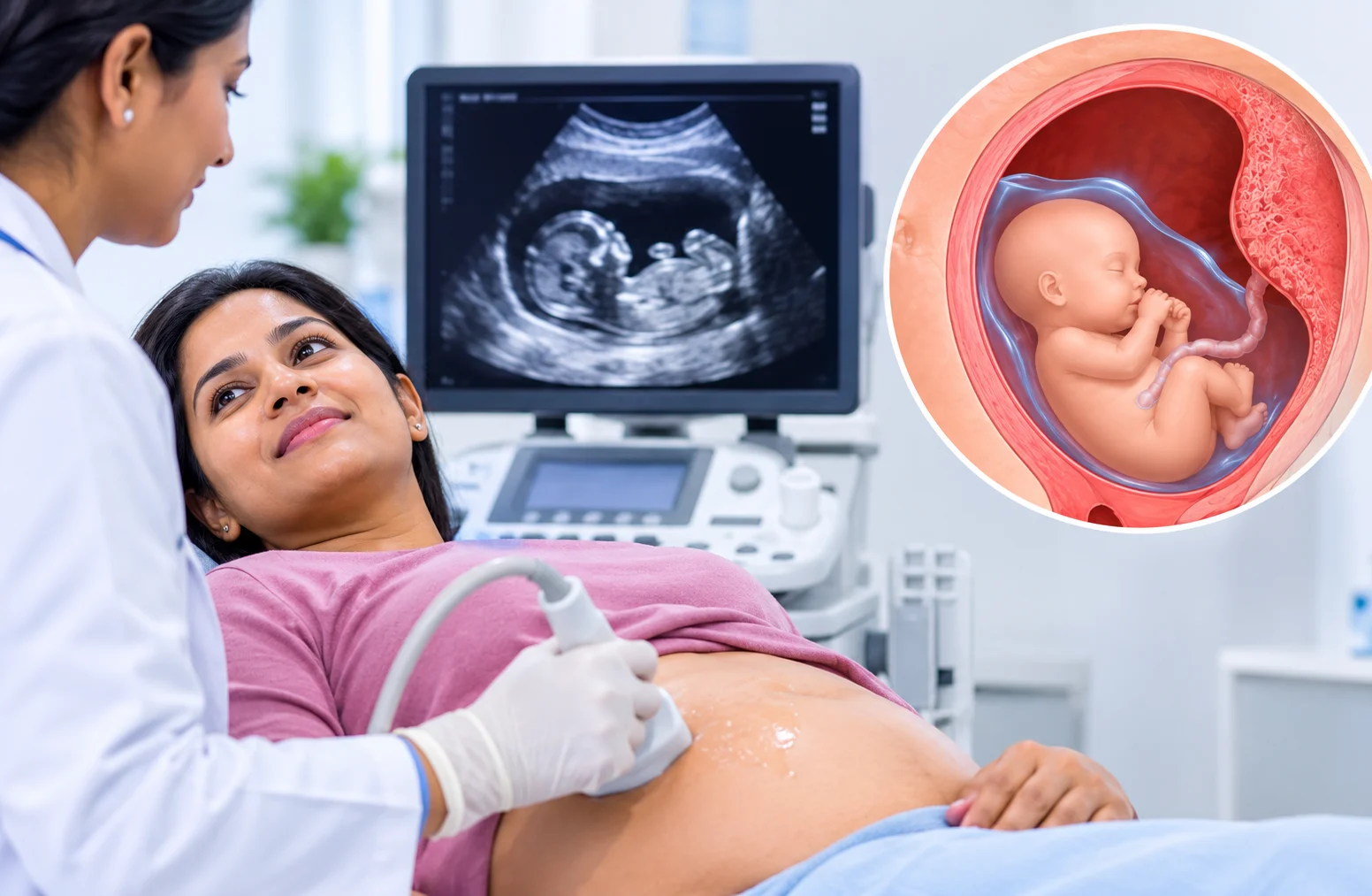
Oligohydramnios is a condition in which the amniotic fluid surrounding the baby is lower than expected for the stage of pregnancy. It is diagnosed through ultrasound, with a single deepest pocket (SDP) of less than 2 cm indicating low fluid. SDP is preferred over the amniotic fluid index (AFI), as AFI can overdiagnose the condition and lead to unnecessary interventions. Severe oligohydramnios generally refers to an SDP of less than 1 cm, while anhydramnios means no measurable amniotic fluid.
Amniotic fluid cushions your baby and supports movement, lung and digestive development. Low fluid affects approximately 1–5% of pregnancies. Its significance depends on when it develops: second-trimester oligohydramnios can seriously affect lung development, while isolated oligohydramnios near term may occur in an otherwise healthy pregnancy and often requires closer monitoring.
How Amniotic Fluid Levels Are Measured
Doctors measure amniotic fluid during a routine ultrasound scan. Two methods are commonly used, and both are quick and painless. Here is what each one means.
The amniotic fluid index (AFI) adds up fluid pockets in four areas of the womb. An AFI below 5 cm indicates oligohydramnios, while 5 to 8 cm is borderline and higher readings are normal. The other method, the maximum vertical pocket, measures the single deepest pocket of fluid. A pocket of 2 cm or less also indicates low fluid.
Causes of Oligohydramnios
Oligohydramnios can occur due to problems involving the baby, placenta or mother. In some pregnancies, no clear cause is identified (idiopathic oligohydramnios). Common causes include:
- Fetal kidney or urinary abnormalities: Conditions such as absent kidneys (renal agenesis) or blocked urine flow (posterior urethral valves) can reduce fluid production.
- Placental insufficiency: Poor placental function can restrict blood flow to the baby, leading to fetal growth restriction and reduced urine production.
- Ruptured membranes: Premature rupture of membranes, including preterm prelabour rupture of membranes (PPROM), can cause amniotic fluid to leak.
- Twin-to-twin transfusion syndrome: In some identical twin pregnancies, the donor twin may develop low amniotic fluid.
- Maternal health conditions: High blood pressure, pre-eclampsia, diabetes and lupus can affect placental function and fluid levels.
- Certain medicines: ACE inhibitors, ARBs and NSAIDs such as indomethacin can reduce amniotic fluid.
- Post-term pregnancy: Amniotic fluid levels may decrease after the due date.
- Dehydration: Significant maternal dehydration may temporarily affect fluid levels.
Identifying the underlying cause helps doctors determine the appropriate monitoring and treatment.
How Is Oligohydramnios Diagnosed?
Doctors use the following assessments to confirm low amniotic fluid and identify its cause:
- Ultrasound scan: Measures the amniotic fluid level and assesses the baby's growth and kidneys, urinary tract and other structures.
- Doppler ultrasound: Checks blood flow through the placenta and umbilical cord, particularly if fetal growth restriction is suspected.
- Membrane rupture tests: If fluid leakage is suspected, a sterile speculum examination and tests such as nitrazine or AmniSure may help confirm whether the membranes have ruptured.
- Maternal assessment: Reviews medical conditions, pregnancy history and medicines that may affect fluid levels.
The findings help doctors understand the cause and plan appropriate monitoring and care.
Risk Factors of Oligohydramnios
Some pregnancies are more likely to develop low amniotic fluid than others. Knowing your risk helps your team keep a closer eye on your fluid levels. The main risk factors are below.
- Low fluid in a past pregnancy: A previous episode increases the risk.
- Going past your due date: Fluid tends to fall in a post-term pregnancy.
- High blood pressure or preeclampsia: These affect the placenta and fluid levels.
- Dehydration: Not drinking enough fluids.
- Ruptured membranes: A leak of amniotic fluid.
Having a risk factor does not mean you will develop low fluid. It simply guides how closely you are monitored. Regular scans catch any change early.
Symptoms of Oligohydramnios
Oligohydramnios usually causes no symptoms and is found on a routine scan. Occasionally, signs prompt a check. Report any of the signs below to your doctor.
- Fluid leaking from the vagina: A trickle or gush can mean the waters have broken.
- A small bump: The uterus may measure smaller than expected for your dates.
- Reduced baby movements: Feeling your baby move less than usual.
Because there are often no symptoms, scans are the main way doctors detect low fluid. If you notice leaking fluid or fewer movements, contact your doctor without delay. These signs always deserve a prompt check.
Complications of Oligohydramnios
The complications of oligohydramnios depend on when it develops, how severe it is and its underlying cause. Low fluid early in pregnancy can seriously affect fetal development, while later-onset oligohydramnios can increase the risks of complications during labour and delivery.
Before 24–28 Weeks
- Pulmonary hypoplasia: Severely reduced fluid can prevent the baby's lungs from developing properly.
- Potter sequence: Prolonged low fluid can cause characteristic facial features, limb deformities and joint contractures due to restricted movement and pressure.
- Preterm birth and perinatal death: When associated with conditions such as PPROM or severe fetal kidney abnormalities, early-onset oligohydramnios carries a poor prognosis and a high risk of complications, including death around birth.
These pregnancies require careful counselling with maternal-fetal medicine (MFM) specialists and neonatologists about the baby's prognosis and available care.
In the Third Trimester
- Umbilical cord compression: Low fluid increases the risk of cord compression, which can affect the baby's oxygen supply.
- Fetal growth restriction (FGR): Poor placental function may limit the baby's growth.
- Non-reassuring fetal heart rate: Cord compression can cause changes in the baby's heart rate during labour.
- Meconium aspiration: If the baby passes meconium before birth, it may be inhaled into the lungs, causing breathing problems.
- Stillbirth and NICU admission: Depending on the underlying cause and severity, there may be an increased risk of stillbirth or the need for specialised newborn care.
- Caesarean delivery: Fetal heart rate abnormalities or concerns about the baby's well-being may necessitate a caesarean birth.
Treatment Options for Oligohydramnios
Treatment depends on the gestational age, fluid level, underlying cause and the baby's well-being. Options may include:
- Closer monitoring: Ultrasound scans to assess fluid levels and growth, along with nonstress tests (NST) or biophysical profiles (BPP), help monitor the baby's well-being. Monitoring may be once or twice weekly, depending on the clinical situation.
- Treating the underlying cause: Doctors manage conditions such as high blood pressure, placental problems or maternal dehydration where appropriate. Doppler scans may be used if fetal growth restriction or placental insufficiency is suspected.
- Managing PPROM: If the membranes rupture prematurely, hospital monitoring, antibiotics to reduce infection risk and other gestation-specific treatments may be recommended.
- Steroid injections: If preterm delivery is expected within seven days, corticosteroids may be given before 34 weeks to support the baby's lung development.
- Planned delivery: For isolated oligohydramnios, delivery is generally recommended between 36 weeks and 37 weeks plus 6 days, or when diagnosed later. Borderline AFI alone (5–8 cm) is not an indication for induction.
- Care during labour: Continuous fetal heart rate monitoring helps detect signs of fetal distress. Amnioinfusion may be considered in selected cases of recurrent cord compression.
Drinking more water may temporarily increase amniotic fluid levels, but the effect is usually short-lived and has not been shown to improve pregnancy outcomes. IV fluids are not a proven treatment for improving outcomes either. Your doctor will recommend a plan based on your pregnancy and your baby's condition.
What is the Prognosis (Outlook) for Oligohydramnios?
The outlook for oligohydramnios depends on when it develops, how severe it is and its underlying cause. Isolated oligohydramnios diagnosed near term, without other pregnancy complications, generally has a favourable outlook with appropriate monitoring.
However, early-onset or severe oligohydramnios, particularly when associated with PPROM or fetal kidney abnormalities, can carry a serious prognosis and increase the risk of complications. Regular monitoring and timely specialist care help guide decisions about pregnancy management and delivery. Your doctor will discuss your baby's individual outlook and care plan with you.
What Questions Should I Ask My Gynecologist?
Preparing a few questions for your obstetrician helps you feel more in control of your care. The prompts below are grouped to make them easier to use. Our gynecologist would always rather you asked than worried alone.
Monitoring and Diagnosis Questions
- How low is my amniotic fluid, and what does my AFI mean?
- How often will my baby and my fluid be checked?
- Is a cause for the low fluid known?
- Which signs should make me call you straight away?
Delivery and Care Questions
- Might I need to be induced, and if so, when?
- Does low fluid make a caesarean more likely for me?
- Will my baby need any special care after birth?
- Is there anything I can do to help, such as staying hydrated?
Writing your questions down makes it less likely you'll forget them on the day. A clear conversation helps you follow your care plan with confidence. Your team is there to reassure and guide you.
Prevention & Lifestyle Tips for Oligohydramnios
There is no sure way to prevent oligohydramnios, as it often has no clear cause. What helps is attending your scans and reporting any warning signs. The tips below support close monitoring of your pregnancy.
- Attend all your antenatal visits: Regular scans help identify and track low fluid.
- Report reduced movements: Tell your doctor promptly if your baby moves less.
- Report any fluid leak: A trickle or gush of fluid needs a prompt check.
- Stay well hydrated: Drinking enough fluids supports your overall pregnancy health.
- Manage any health conditions: Keep conditions such as high blood pressure well controlled.
None of these steps can guarantee normal fluid levels, but they help your team stay ahead. Regular monitoring is what makes the biggest difference. Your doctor will let you know if you need anything else.
Why Choose BirthRight by Rainbow Hospitals for Oligohydramnios Care?
BirthRight by Rainbow Hospitals brings together obstetricians, maternal-fetal medicine specialists and newborn care in one place, backed by three decades of expertise in women’s and children’s health. Low amniotic fluid requires careful, regular monitoring of your baby, and our teams are equipped to do exactly that. From advanced ultrasound to growth scans and delivery planning, we coordinate your care so nothing falls through the cracks.
If your baby needs closer attention or earlier delivery, you have access to high-risk pregnancy care and a well-equipped neonatal unit under the same roof. This means monitoring, delivery, and newborn care happen in one place. The aim throughout is a calm, well-watched pregnancy and a healthy baby.

Find a Doctor and Book Appointment Online
Meet our specialist doctors who bring together clinical expertise, compassion, and personalised care to support your health and well-being. Choose from 1,300+ specialists across our network and book an appointment with BirthRight and Rainbow Children Hospitals, offering 24*7 support to you and your family.

Dr. Pranathi Reddy A
Clinical Director – Obstetrics & Gynecology.
English,Hindi,Telugu Banjara Hills

Dr. Gauri Vinayak Dhamangaonkar
Senior Consultant - Fetal Medicine
15 Years English,Hindi,Marathi,Telugu Kondapur OP, Banjara Hills

Dr. Shruthi Reddy Poddutoor
Consultant Obstetrician, Gynecologist & Laparoscopic Surgeon
English,Telugu Banjara Hills

Dr. Himabindu Veerla
Consultant Obstetrician, Gynecologist & Laparoscopic Surgeon
English,Telugu Banjara Hills

Dr. Bhargavi Reddy K
Consultant - Obstetrics and Gynecology
10 Years English,Hindi,Telugu Banjara Hills, Attapur Clinic

Dr. Annie Pranutha P
Consultant Obstetrics and Gynecology
9 Years English,Hindi,Telugu Banjara Hills, Attapur Clinic

Dr. Sasikala Kola
Consultant Obstetrician & Gynecologist
English,Hindi,Telugu Banjara Hills

Dr. Atigadda Vijaya
Consultant - Obstetrics & Gynecology
Hindi,Telugu Banjara Hills, Himayatnagar, Attapur Clinic

Dr. Nishanth Reddy Inavolu
Visiting Consultant Physician and Diabetologist & Internal Medicine
English,Hindi,Telugu Banjara Hills, Himayatnagar

Dr. Tulika Tayal
Consultant - Fetal Medicine
English,Telugu Banjara Hills

Dr. M Prathyusha Reddy
Consultant Obstetrics & Gynecology
English,Telugu Banjara Hills

Dr. Nithya Narasimha Murthy
Consultant -Psychiatrist
English,Hindi,Telugu Kondapur OP, Banjara Hills, Child Development Centre - Banjarahills Rd No 10

Dr. Brundavani
Consultant - Nutritionist
English,Hindi,Telugu Kondapur OP, Hydernagar, Banjara Hills, Child Development Centre - Banjarahills Rd No 10

Dr. Niveditha Chalmeda
Consultant
English,Telugu Banjara Hills

Dr. Kirti Reddy Patlolla
Consultant Obstetrics and Gynaecology
English,Telugu Banjara Hills, Attapur Clinic

Dr. Tuheena Sharma
Consultant - Perinatal Physiotherapy
10 Years English,Telugu Banjara Hills

Dr. Aditi Shah
Consultant - Fetal Medicine
English,Telugu Banjara Hills

Dr. Swathi Naga Tulasi Rayapureddy
Lactation Consultant
8 Years English,Telugu Banjara Hills

Dr. Swetha Reddy. S
CONSULTANT PERINATAL PSYCHIATRIST AND WOMEN MENTAL HEALTH SPECIALIST
13 Years English,Hindi,Telugu Banjara Hills

Dr. Addu Kiranmayi
Chief Clinical Nutritionist and Lifestyle Medicine Consultant
15 Years English,Hindi,Telugu Himayatnagar, Banjara Hills

Dr. Palle Nalini Kumari
Lactation Consultant
17+ Years English,Hindi,Telugu Banjara Hills

Dr. Nazia Tabassum
Consultant - Breast, Plastic & Reconstructive Surgeon
9 Years English,Hindi,Telugu,Urdu Banjara Hills

Dr. Sruthi Cheera
Consultant Breast Surgeon
5 Years English,Hindi,Kannada,Telugu Banjara Hills

Dr. Supriya Reddy
Lactation Consultant
5 Years English,Hindi,Telugu Banjara Hills

Dr. Niraj Krishnamurthy Yanamandra
Senior Consultant Obstetrician & Gynaecologist, Laparoscopy & Hysteroscopy Surgeon
English,Hindi,Marathi,Telugu Hydernagar, Banjara Hills, Financial District

Dr. B. Rao Bahadur
Consultant – Obstetrician & Gynecologist, Laparoscopic ,& Hysteroscopic Surgeon
22 Years English,Hindi,Konkani,Marathi,Telugu Banjara Hills, Kondapur OP

Dr. Sneha Kulkarni
Consultant - Child, Adolescent & Adult Psychiatrist
10 Years English,Hindi,Kannada,Telugu Secunderabad, Banjara Hills, Child Development Centre - Banjarahills Rd No 10

Dr. Lavanya Janagama
Consultant – Obstetrics & Gynecology
10+ Years English Banjara HillsLeading Hospitals for Women Care
Rainbow Children's Hospital stands as a testament to the hospital's continual pursuit of excellence and innovation, providing specialized care for women and children


















chennai
Blogs
Discover our most recent health articles provided by our reliable experts.




What Are People Saying About Us
Embark on a journey of inspiration and hope with our patient success stories, complemented by informative videos from our dedicated doctors.




Media
 Common Gynaecological Surgeries to Fix Female Reproductive Issues
 Healthy Woman - Healthy World
 Healthier Women For a Healthier Future...
 Rainbow Children’s Hospital & BirthRight by Rainbow Launch Video Consultation Facilities
 Dr.Pranthi Reddy
 What is the use of that?
 Can you try this time?
 Pregnant Women are Not Unfit
 Declining Age of Menarche - A Matter of Concern
 Important Facts about Cervical Cancer
 Be careful before preempting
 Flu every month!
 Menstrual cramps
 Premature delivery
 Whether laughing or coughing...why?
 Multi - Tasking may be Cool but it's not Healthy
 Pregnant and Worried about COVID-19? Here's Everything you Need to know
 Video Consultation in Pandamic Situation for Pregnancy Women's
 Women.. Various types of cysts
 Recurrent Pregnancy Loss in Women
 Early Onset of Puberty: Causes, Symptoms and Treatment Options
Common Gynaecological Surgeries to Fix Female Reproductive Issues
Healthy Woman - Healthy World
Healthier Women For a Healthier Future...
FAQs
Can drinking more water really increase my amniotic fluid?
Can leaking water cause oligohydramnios, and how can I tell?
Does low amniotic fluid affect my baby’s movements or growth?
Is bed rest helpful for low amniotic fluid?
Can oligohydramnios improve on its own as pregnancy progresses?
Does low amniotic fluid mean something is wrong with my baby’s kidneys?
Is low amniotic fluid more common in twins, after the due date or with high blood pressure?
Can oligohydramnios happen again in a future pregnancy?
Is a C-section more likely if I have low amniotic fluid?
What is a normal amniotic fluid level, and what AFI is considered low?
Does oligohydramnios always mean an early delivery?
Quick Links
Free Calculators to Track and Predict your Pregnancy
Gynecologist in Other Locations
Women's Health Conditions We Treat
- Mastitis (Breast Infection)
- PCOS (Polycystic Ovary Syndrome)
- Uterine Fibroids (Leiomyomas)
- Recurrent Pregnancy Loss
- Blocked Fallopian Tubes (Fallopian Tube Obstruction)
- Gestational Diabetes in Pregnancy
- Incompetent Cervix (Cervical Insufficiency)
- COVID-19 in Pregnancy
- Cytomegalovirus (CMV) in Pregnancy
- HELLP Syndrome
- Luteal Phase Defect
- Vasa Previa
- Listeria in Pregnancy
- Placenta Previa
- Endometrial Polyps (Uterine Polyps)
- Congenital Heart Disease in Pregnancy
- Hyperemesis Gravidarum (Severe Morning Sickness)
- Preeclampsia (toxemia)
- Fetal Distress (Non-Reassuring Fetal Status)
- Postpartum Haemorrhage (PPH)
- Placental Abruption (Abruptio Placentae)
- Placenta Accreta
- Postpartum Depression (PPD)
- Rhesus (Rh) Incompatibility
- Syphilis in Women
- Thalassemia in Pregnancy
- Gestational Thrombocytopenia
- Diabetes in Pregnancy
- Uterine Rupture
- Migraine in Pregnancy
- Eclampsia
- Uterine Inversion (Inverted Uterus)
- Rubella in Pregnancy
- Pulmonary Hypertension in Pregnancy
- Hydrops Fetalis (Fetal Hydrops)
- Iron-Deficiency Anaemia in Pregnancy
- Hypothyroidism in Pregnancy
- Pregnancy Constipation
- Retained Placenta
- Antiphospholipid Syndrome (APS)
- Subchorionic Hemorrhage
- Asthma in Pregnancy
- Amniotic Fluid Embolism (AFE)
- Placenta Increta
- Fetal Macrosomia
- Gestational Trophoblastic Disease (GTD)
- Postpartum Psychosis
- Chronic Hypertension in Pregnancy