




Placenta Increta
Placenta increta means the placenta has grown deeper into the uterine wall than normal. It is serious, but complications are not inevitable. With early scans, a planned caesarean and an experienced team, you can be well prepared. Know the warning signs, and go to your planned hospital straight away if you bleed or have regular contractions.

Seamless support from diagnosis to post treatment care
Overview
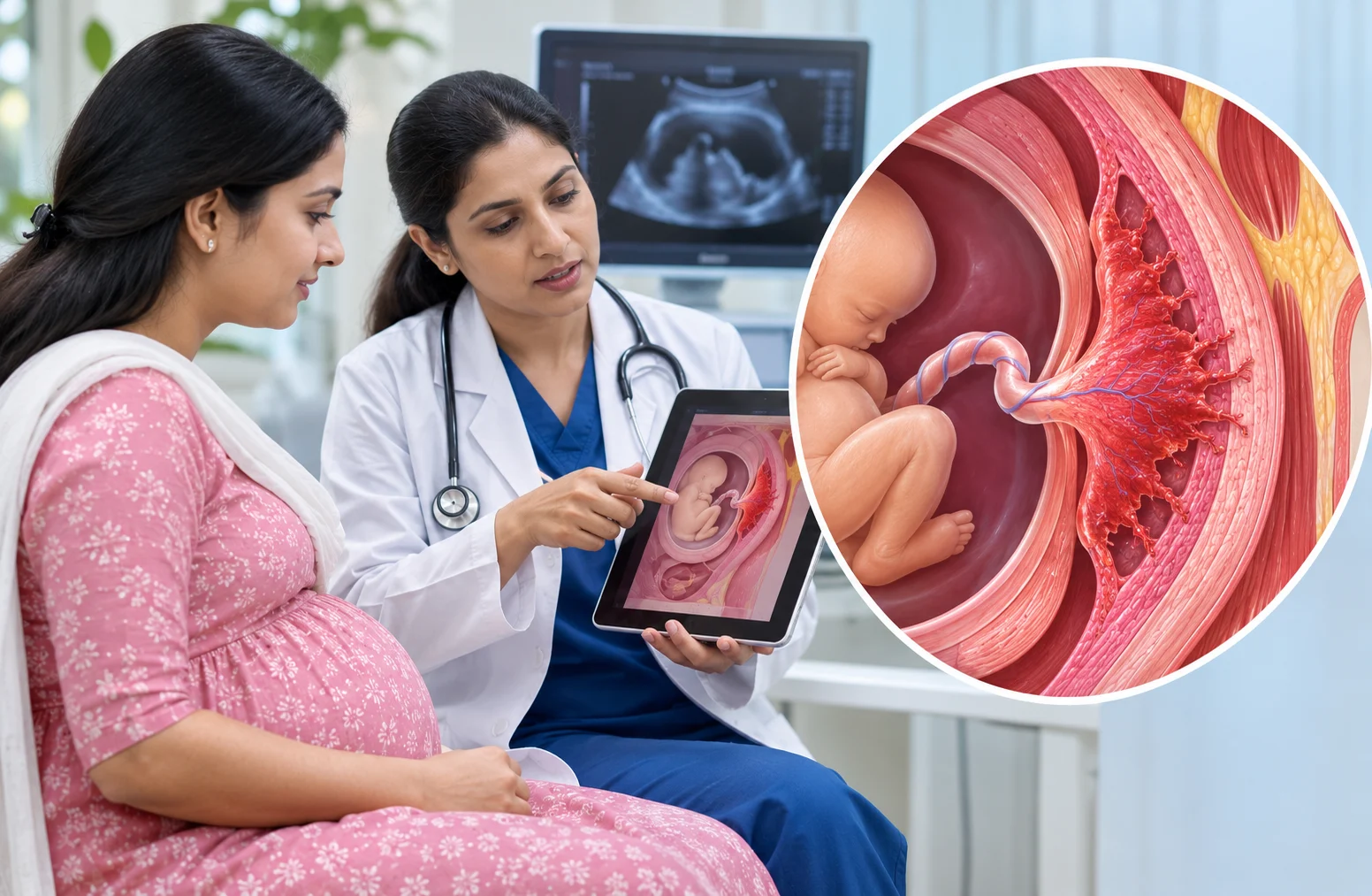
Pregnancy can sometimes bring unexpected findings that require closer monitoring and specialist care. Being told that your placenta has grown deeper into the uterus than usual may raise questions about your health, your baby's safety, and what to expect during delivery. With early diagnosis and careful planning, your medical team can prepare for potential complications and support you through delivery and recovery.
What Is Placenta Increta?
Placenta increta is a condition in which the placenta grows into the muscular wall of the uterus, called the myometrium. Normally, the placenta attaches to the inner lining of the uterus and separates after the baby is born. With placenta increta, it grows too deeply into the muscle and may not separate normally after delivery.
Placenta increta is part of a group of conditions called placenta accreta spectrum (PAS), the preferred umbrella term for abnormal placental attachment and invasion. Because the placenta may remain firmly attached after birth, attempts to remove it can cause severe bleeding.
A diagnosis does not mean that complications are inevitable. However, it requires specialist assessment and careful delivery planning.
How Placenta Increta Differs from Accreta and Percreta?
According to the FIGO 2019 clinical classification, PAS has three grades based on the depth of placental invasion:
- Grade 1 – Placenta accreta: The placenta attaches abnormally firmly to the uterine wall without invading the muscle.
- Grade 2 – Placenta increta: The placenta grows into the uterine muscle (myometrium).
- Grade 3 – Placenta percreta: The placenta grows through the uterine wall and may extend into nearby organs, such as the bladder.
Placenta increta is therefore classified as FIGO Grade 2. However, the placenta's location, its relationship with nearby organs and your overall health also influence the risks and care required.
Your specialist may use ultrasound, MRI and clinical assessment to understand the extent of placental involvement and plan delivery.
How Common Is Placenta Accreta Spectrum?
PAS affects approximately 1 in 300–500 deliveries, although estimates vary across populations. Its incidence has increased alongside rising caesarean section rates.
Indian hospital studies also report varying rates, including approximately 1 in 1,101 deliveries in one tertiary referral centre. A previous caesarean section, particularly with placenta previa (when the placenta covers or lies close to the cervix), increases the risk.
Causes of Placenta Increta
Placenta increta develops when the placenta grows too deeply into the uterine muscle. The leading explanation is damage or a defect at the endometrial–myometrial interface (the boundary between the uterine lining and muscle). At a previous uterine scar, the decidua basalis (the specialised pregnancy-related lining beneath the placenta) may not develop normally. This allows placental tissue to attach and grow abnormally deeply into the uterine wall.
Although previous uterine surgery is a common contributing factor, placenta increta can also occur without a history of surgery. It is not caused by anything a mother has done or failed to do during pregnancy.
Risk Factors of Placenta Increta
Factors associated with an increased risk of placenta accreta spectrum (PAS) include:
- Previous caesarean delivery: Risk increases with each additional caesarean section.
- Placenta previa: Risk is particularly high when the placenta covers the cervix and lies over a previous caesarean scar.
- Previous uterine procedures: Myomectomy (fibroid removal), dilation and curettage (D&C), endometrial ablation and surgery for Asherman syndrome (scar tissue inside the uterus) can increase risk.
- Assisted reproductive technology (ART): Pregnancies following IVF, particularly frozen embryo transfer, have been associated with increased PAS risk.
- Older maternal age: Risk is higher in women aged 35 and above.
- Previous PAS: Having PAS in an earlier pregnancy increases recurrence risk.
- Other associated factors: Multiple previous pregnancies (high parity), uterine abnormalities, smoking and a short interval between pregnancies have also been associated with PAS, although evidence varies.
The combination of placenta previa and previous caesarean deliveries is particularly important. According to ACOG's Obstetric Care Consensus No. 7, Placenta Accreta Spectrum (2018), the reported risk of PAS among women with placenta previa increases with the number of caesarean deliveries: 3% with the first, 11% with the second, 40% with the third, 61% with the fourth and 67% with the fifth or more.
These figures apply to PAS as a whole, not placenta increta alone, and specifically to women with placenta previa. Individual risk also depends on medical history and placental location.
Symptoms and Urgent Warning Signs of Placenta Increta
Placenta increta often causes no noticeable symptoms during pregnancy. It is usually suspected during an ultrasound scan, particularly when the placenta is low-lying, or you have a history of uterine surgery. In selected cases, an MRI may be recommended to assess how deeply the placenta has grown or whether nearby organs are involved.
Some women may experience vaginal bleeding, particularly when placenta previa is also present. However, the absence of bleeding does not rule out placenta increta.
Seek immediate medical attention if you experience vaginal bleeding during the second half of pregnancy. If you have been diagnosed with or are suspected of having placenta increta, follow your specialist's emergency plan and go to the designated hospital immediately if you bleed, develop regular contractions, or suspect that labour has started. Do not wait for your next antenatal appointment.
Diagnosis of Placenta Increta
Placenta increta is usually suspected through targeted ultrasound, supported by your medical and pregnancy history. Women with placenta previa and a previous caesarean delivery or other uterine surgery may need a detailed assessment, often during the 18–24-week ultrasound period.
Ultrasound Signs of Placenta Increta
During an ultrasound, your specialist may look for signs of abnormal placental attachment, including:
- Loss of the retroplacental clear zone: The normal clear space between the placenta and uterine muscle is absent.
- Placental lacunae: Irregular spaces or blood-filled areas appear within the placenta.
- Thinning of the myometrium: The uterine muscle beneath the placenta becomes unusually thin.
- Bladder-wall interruption: The normal boundary between the uterus and bladder appears disrupted.
- Bridging vessels: Abnormal blood vessels extend from the placenta towards or beyond the uterine surface, visible on colour Doppler imaging.
When Is an MRI Needed?
MRI may be recommended when ultrasound findings are unclear or when specialists suspect deeper invasion, particularly towards the bladder, pelvic tissues or other nearby structures. It can be especially useful when assessing suspected percreta or posterior and parametrial extension.
Can Placenta Increta Be Missed During Pregnancy?
Yes. A normal ultrasound does not completely rule out placenta accreta spectrum (PAS), particularly when clinical risk factors are present. Some cases are identified or confirmed only during delivery or surgery.
Blood tests such as maternal serum alpha-fetoprotein (AFP) are not diagnostic of placenta increta. Diagnosis relies primarily on imaging findings and clinical assessment, with surgical findings and, where available, histopathological examination helping confirm the condition.
Possible Complications of Placenta Increta
Placenta increta can cause serious complications, particularly during delivery, because the placenta may remain firmly attached to the uterine wall. Possible complications include:
- Severe bleeding: Blood loss can be substantial. A multicentre study reported median blood loss of approximately 2,000 mL (2 litres) during PAS-related caesarean hysterectomy.
- Blood transfusion: Multiple units of blood may be needed to replace blood lost during surgery.
- Injury to nearby organs: Bladder or ureter injuries can occur, particularly when the placenta extends beyond the uterine wall.
- Hysterectomy: Removing the uterus may be necessary to control bleeding, permanently ending the ability to carry another pregnancy.
- Preterm birth: Planned early delivery may mean your baby needs additional monitoring or neonatal intensive care.
- Intensive care admission: Close monitoring may be required after major surgery or significant blood loss.
These complications do not occur in every case. Their likelihood depends on the extent of placental invasion and the expertise and resources available during delivery.
Treatment Options for Placenta Increta
Treatment for placenta increta depends on how deeply the placenta has grown into the uterine wall, its location, your health and your baby's condition. The main aim is to plan delivery before labour begins, prevent severe bleeding and avoid forcibly separating the placenta.
1. Planned Caesarean Delivery
According to the American College of Obstetricians and Gynecologists (ACOG) and the Society for Maternal-Fetal Medicine (SMFM), planned delivery is generally recommended between 34 weeks and 35 weeks + 6 days in stable women with PAS. Earlier delivery may be necessary if you develop bleeding, labour, pre-eclampsia or other complications.
Antenatal corticosteroids may be given to help your baby's lungs mature when preterm delivery is expected.
2. Caesarean Delivery with Hysterectomy
The most established treatment for significant PAS is caesarean hysterectomy. The baby is delivered through an incision planned away from the placenta, and the uterus is removed with the placenta still attached. This avoids forcibly separating the placenta, which can trigger severe bleeding.
A vertical midline abdominal incision may be used for better surgical access. Depending on placental location, the surgeon may also make a classical or fundal uterine incision to avoid cutting through the placenta.
3. Multidisciplinary Team and Blood-Loss Preparation
Delivery should take place at a specialist centre with a team experienced in managing PAS. This may include obstetricians, maternal-fetal medicine specialists, pelvic surgeons, anaesthetists, urologists, interventional radiologists and neonatologists.
Before surgery, the team prepares for major blood loss through:
- Cross-matched blood and blood products, with a massive transfusion protocol available.
- Cell salvage equipment to collect and return your own blood during surgery, where available.
- Intensive-care support if needed.
- Ureteric stents or interventional radiology balloon procedures in selected cases, depending on placental invasion and surgical findings. These are not routine for every patient.
Tranexamic acid may be used to help control significant bleeding. However, routine preventive use specifically for PAS is not yet supported by sufficient evidence.
4. Fertility-Sparing Treatment
In carefully selected cases, doctors may consider leaving the placenta inside the uterus after delivering the baby. This approach, called expectant management, aims to preserve the uterus and allow the placenta to gradually shrink and be absorbed.
However, it carries risks of delayed haemorrhage and infection. In one recent study of 43 women managed with the placenta left in situ, 12% experienced bleeding requiring hysterectomy and 9% developed endometritis (infection of the uterine lining). These figures are from a single-centre study and may not reflect every patient's risk.
This approach requires regular clinical reviews, ultrasound monitoring and immediate access to emergency care. Methotrexate is not recommended because its benefits are unproven and it can cause serious adverse effects.
Your doctor will discuss the safest approach based on the extent of placental invasion, your health and your preferences. A planned procedure allows the team to prepare for complications, although it cannot eliminate every risk.
Prognosis: What to Expect after Placenta Increta Treatment
The outlook is generally better when PAS is diagnosed during pregnancy and delivery is planned at a specialist centre with an experienced multidisciplinary team.
Recovery After Delivery
Recovery depends on blood loss, the extent of surgery and any complications. Follow-up care may include:
- Blood tests and iron treatment for anemia.
- Contraception and fertility counselling, particularly if the uterus is preserved.
- Emotional support or counselling to help you cope with the experience and any changes to future family plans.
Can Placenta Increta Happen Again?
If the uterus is preserved, another pregnancy may be possible, but PAS can recur. Studies report recurrence rates of approximately 5.5% after a previous PAS pregnancy, with estimates reaching around 11.8% following conservative, uterus-preserving treatment.
Any future pregnancy should be planned with specialist advice and early assessment of placental location.
If a hysterectomy is performed, you will no longer be able to carry a pregnancy. Your specialist can discuss your recovery and available reproductive options.
What Questions to Ask Your Gynaecologist?
Understanding your diagnosis and delivery plan can help you feel more prepared. Consider taking these questions to your appointments.
About diagnosis and delivery
- How certain is the diagnosis, and will I need additional ultrasound scans or an MRI?
- How deeply has the placenta grown, and are nearby organs involved?
- When do you recommend delivery, and why?
- What symptoms mean I should go to the hospital immediately?
- Does the planned delivery hospital have the necessary surgical expertise, blood products, and critical-care support?
- Which specialists will be involved in my care?
About fertility and recovery
- Is a hysterectomy likely in my case?
- Could a fertility-sparing approach be considered, and what risks would it involve?
- What should I expect during recovery, and how long might I need to stay in hospital?
- Will I need a blood transfusion or intensive-care monitoring?
- If my uterus is preserved, what should I know before planning another pregnancy?
- What emotional support is available if I find the diagnosis or treatment difficult?
Your medical team should explain the plan in language you understand and give you the opportunity to discuss your concerns. If anything is unclear, ask your gynecologist for further explanation before making decisions about your care.
Prevention and Lifestyle Tips to Avoid Placenta Increta
Placenta increta cannot always be prevented. It is associated with changes in the uterine wall and can occur even without known risk factors. However, sharing your medical history and identifying the condition early can help your team plan appropriate care.
- Discuss your surgical history: Tell your obstetrician about previous caesarean deliveries, fibroid surgery or other procedures involving the uterus.
- Attend recommended ultrasound scans: Scans help assess the location of the placenta and may identify features that need further investigation.
- Seek early specialist review if you have risk factors: If you have placenta previa and a previous caesarean, ask whether you need assessment by a team experienced in placenta accreta spectrum.
- Keep your antenatal appointments: Regular reviews let your team monitor your pregnancy and update the delivery plan as needed.
- Know your emergency plan: If placenta increta is suspected or confirmed, understand which hospital to attend and what to do if bleeding or contractions begin.
These steps cannot guarantee prevention, but they can help your medical team recognise the condition, prepare for delivery and respond to complications when necessary.
Why Choose BirthRight by Rainbow Hospitals for Placenta Increta Care?
A diagnosis of placenta increta may mean that your pregnancy needs additional monitoring and a carefully coordinated delivery plan. At BirthRight by Rainbow Hospitals, we help families understand their options and plan care around the needs of the mother and baby.
- Coordinated high-risk pregnancy care: We work to coordinate obstetric assessment and the involvement of relevant surgical, anaesthesia, newborn and critical-care teams according to each patient's needs and the services available at the treating location.
- Individualised delivery planning: We consider your medical history, scan findings, placental involvement and overall condition when planning the timing and approach to delivery.
- Preparation for potential bleeding: We assess the need for blood products and appropriate surgical and critical-care support before delivery.
- Maternal and newborn support: We plan for the mother's recovery and the baby's needs, including assessment for additional newborn care if early delivery is necessary.
- Clear communication and follow-up: We explain the diagnosis, discuss the recommended treatment, and help you understand what to expect during recovery and any future pregnancy planning.
Our aim is to keep you informed and supported at every stage, from diagnosis and delivery planning to recovery. If you have been diagnosed with or are suspected of having placenta increta, speak with an obstetrician experienced in high-risk pregnancies to discuss the care you need.

Find a Doctor and Book Appointment Online
Meet our specialist doctors who bring together clinical expertise, compassion, and personalised care to support your health and well-being. Choose from 1,300+ specialists across our network and book an appointment with BirthRight and Rainbow Children Hospitals, offering 24*7 support to you and your family.

Dr. Pranathi Reddy A
Clinical Director – Obstetrics & Gynecology.
English,Hindi,Telugu Banjara Hills

Dr. Gauri Vinayak Dhamangaonkar
Senior Consultant - Fetal Medicine
15 Years English,Hindi,Marathi,Telugu Kondapur OP, Banjara Hills

Dr. Shruthi Reddy Poddutoor
Consultant Obstetrician, Gynecologist & Laparoscopic Surgeon
English,Telugu Banjara Hills

Dr. Himabindu Veerla
Consultant Obstetrician, Gynecologist & Laparoscopic Surgeon
English,Telugu Banjara Hills

Dr. Bhargavi Reddy K
Consultant - Obstetrics and Gynecology
10 Years English,Hindi,Telugu Banjara Hills, Attapur Clinic

Dr. Annie Pranutha P
Consultant Obstetrics and Gynecology
9 Years English,Hindi,Telugu Banjara Hills, Attapur Clinic

Dr. Sasikala Kola
Consultant Obstetrician & Gynecologist
English,Hindi,Telugu Banjara Hills

Dr. Atigadda Vijaya
Consultant - Obstetrics & Gynecology
Hindi,Telugu Banjara Hills, Himayatnagar, Attapur Clinic

Dr. Nishanth Reddy Inavolu
Visiting Consultant Physician and Diabetologist & Internal Medicine
English,Hindi,Telugu Banjara Hills, Himayatnagar

Dr. Tulika Tayal
Consultant - Fetal Medicine
English,Telugu Banjara Hills

Dr. M Prathyusha Reddy
Consultant Obstetrics & Gynecology
English,Telugu Banjara Hills

Dr. Nithya Narasimha Murthy
Consultant -Psychiatrist
English,Hindi,Telugu Kondapur OP, Banjara Hills, Child Development Centre - Banjarahills Rd No 10

Dr. Brundavani
Consultant - Nutritionist
English,Hindi,Telugu Kondapur OP, Hydernagar, Banjara Hills, Child Development Centre - Banjarahills Rd No 10

Dr. Niveditha Chalmeda
Consultant
English,Telugu Banjara Hills

Dr. Kirti Reddy Patlolla
Consultant Obstetrics and Gynaecology
English,Telugu Banjara Hills, Attapur Clinic

Dr. Tuheena Sharma
Consultant - Perinatal Physiotherapy
10 Years English,Telugu Banjara Hills

Dr. Aditi Shah
Consultant - Fetal Medicine
English,Telugu Banjara Hills

Dr. Swathi Naga Tulasi Rayapureddy
Lactation Consultant
8 Years English,Telugu Banjara Hills

Dr. Swetha Reddy. S
CONSULTANT PERINATAL PSYCHIATRIST AND WOMEN MENTAL HEALTH SPECIALIST
13 Years English,Hindi,Telugu Banjara Hills

Dr. Addu Kiranmayi
Chief Clinical Nutritionist and Lifestyle Medicine Consultant
15 Years English,Hindi,Telugu Himayatnagar, Banjara Hills

Dr. Palle Nalini Kumari
Lactation Consultant
17+ Years English,Hindi,Telugu Banjara Hills

Dr. Nazia Tabassum
Consultant - Breast, Plastic & Reconstructive Surgeon
9 Years English,Hindi,Telugu,Urdu Banjara Hills

Dr. Sruthi Cheera
Consultant Breast Surgeon
5 Years English,Hindi,Kannada,Telugu Banjara Hills

Dr. Supriya Reddy
Lactation Consultant
5 Years English,Hindi,Telugu Banjara Hills

Dr. Niraj Krishnamurthy Yanamandra
Senior Consultant Obstetrician & Gynaecologist, Laparoscopy & Hysteroscopy Surgeon
English,Hindi,Marathi,Telugu Hydernagar, Banjara Hills, Financial District

Dr. B. Rao Bahadur
Consultant – Obstetrician & Gynecologist, Laparoscopic ,& Hysteroscopic Surgeon
22 Years English,Hindi,Konkani,Marathi,Telugu Banjara Hills, Kondapur OP

Dr. Sneha Kulkarni
Consultant - Child, Adolescent & Adult Psychiatrist
10 Years English,Hindi,Kannada,Telugu Secunderabad, Banjara Hills, Child Development Centre - Banjarahills Rd No 10

Dr. Lavanya Janagama
Consultant – Obstetrics & Gynecology
10+ Years English Banjara HillsLeading Hospitals for Women Care
Rainbow Children's Hospital stands as a testament to the hospital's continual pursuit of excellence and innovation, providing specialized care for women and children


















chennai
Blogs
Discover our most recent health articles provided by our reliable experts.




What Are People Saying About Us
Embark on a journey of inspiration and hope with our patient success stories, complemented by informative videos from our dedicated doctors.




Media
 Common Gynaecological Surgeries to Fix Female Reproductive Issues
 Healthy Woman - Healthy World
 Healthier Women For a Healthier Future...
 Rainbow Children’s Hospital & BirthRight by Rainbow Launch Video Consultation Facilities
 Dr.Pranthi Reddy
 What is the use of that?
 Can you try this time?
 Pregnant Women are Not Unfit
 Declining Age of Menarche - A Matter of Concern
 Important Facts about Cervical Cancer
 Be careful before preempting
 Flu every month!
 Menstrual cramps
 Premature delivery
 Whether laughing or coughing...why?
 Multi - Tasking may be Cool but it's not Healthy
 Pregnant and Worried about COVID-19? Here's Everything you Need to know
 Video Consultation in Pandamic Situation for Pregnancy Women's
 Women.. Various types of cysts
 Recurrent Pregnancy Loss in Women
 Early Onset of Puberty: Causes, Symptoms and Treatment Options
Common Gynaecological Surgeries to Fix Female Reproductive Issues
Healthy Woman - Healthy World
Healthier Women For a Healthier Future...
FAQs
Can placenta increta be missed on a routine ultrasound?
Can placenta increta be seen on ultrasound at 12 or 20 weeks?
What is the survival rate for placenta increta? Is it life-threatening?
What is the difference between placenta accreta, increta and percreta?
All three are forms of placenta accreta spectrum (PAS), classified according to how deeply the placenta grows into the uterus:
- Accreta: The placenta attaches abnormally firmly to the uterine wall.
- Increta: The placenta grows into the uterine muscle.
- Percreta: The placenta grows through the uterine wall and may involve nearby organs, such as the bladder.
Is placenta increta associated with IVF?
Placenta accreta spectrum has been associated with pregnancies following IVF, particularly frozen embryo transfer. A 2023 study found that frozen embryo transfer was associated with approximately three times the adjusted risk of PAS among women who conceived through assisted reproductive technology. This association does not mean that IVF will necessarily cause placenta increta.
Will I always need a hysterectomy if I have placenta increta?
Is placenta increta the same as placenta previa?
Can I deliver at a smaller hospital if I am diagnosed with placenta increta?
Could I go into labour before my planned delivery date?
Can I stay at home late in pregnancy, or should I be admitted earlier?
Can I have a normal delivery with placenta increta?
How long will I stay in the hospital after delivery?
Will my baby need NICU care?
Can I have another baby after placenta increta, and will it come back?
Quick Links
Free Calculators to Track and Predict your Pregnancy
Gynecologist in Other Locations
Women's Health Conditions We Treat
- Mastitis (Breast Infection)
- PCOS (Polycystic Ovary Syndrome)
- Uterine Fibroids (Leiomyomas)
- Recurrent Pregnancy Loss
- Blocked Fallopian Tubes (Fallopian Tube Obstruction)
- Gestational Diabetes in Pregnancy
- Incompetent Cervix (Cervical Insufficiency)
- COVID-19 in Pregnancy
- Cytomegalovirus (CMV) in Pregnancy
- HELLP Syndrome
- Luteal Phase Defect
- Vasa Previa
- Listeria in Pregnancy
- Placenta Previa
- Endometrial Polyps (Uterine Polyps)
- Congenital Heart Disease in Pregnancy
- Hyperemesis Gravidarum (Severe Morning Sickness)
- Preeclampsia (toxemia)
- Fetal Distress (Non-Reassuring Fetal Status)
- Postpartum Haemorrhage (PPH)
- Placental Abruption (Abruptio Placentae)
- Placenta Accreta
- Postpartum Depression (PPD)
- Rhesus (Rh) Incompatibility
- Syphilis in Women
- Thalassemia in Pregnancy
- Gestational Thrombocytopenia
- Diabetes in Pregnancy
- Uterine Rupture
- Migraine in Pregnancy
- Eclampsia
- Uterine Inversion (Inverted Uterus)
- Rubella in Pregnancy
- Pulmonary Hypertension in Pregnancy
- Hydrops Fetalis (Fetal Hydrops)
- Iron-Deficiency Anaemia in Pregnancy
- Hypothyroidism in Pregnancy
- Pregnancy Constipation
- Retained Placenta
- Antiphospholipid Syndrome (APS)
- Subchorionic Hemorrhage