





Placenta Previa: Causes, Symptoms and Management
Placenta previa may first come to attention during a routine pregnancy scan or when bleeding occurs during pregnancy. When the placenta is positioned lower in the uterus than expected, doctors may recommend follow-up scans to see whether its position changes as the pregnancy progresses.
The placenta's location can affect the monitoring needed later in pregnancy and delivery planning. In many cases, the position of the placenta changes as the pregnancy progresses, and your doctor will monitor it closely. Understanding why its position matters, what symptoms to look out for, and how it may affect your pregnancy and delivery can help you feel more informed and prepared.
What is Placenta Previa?
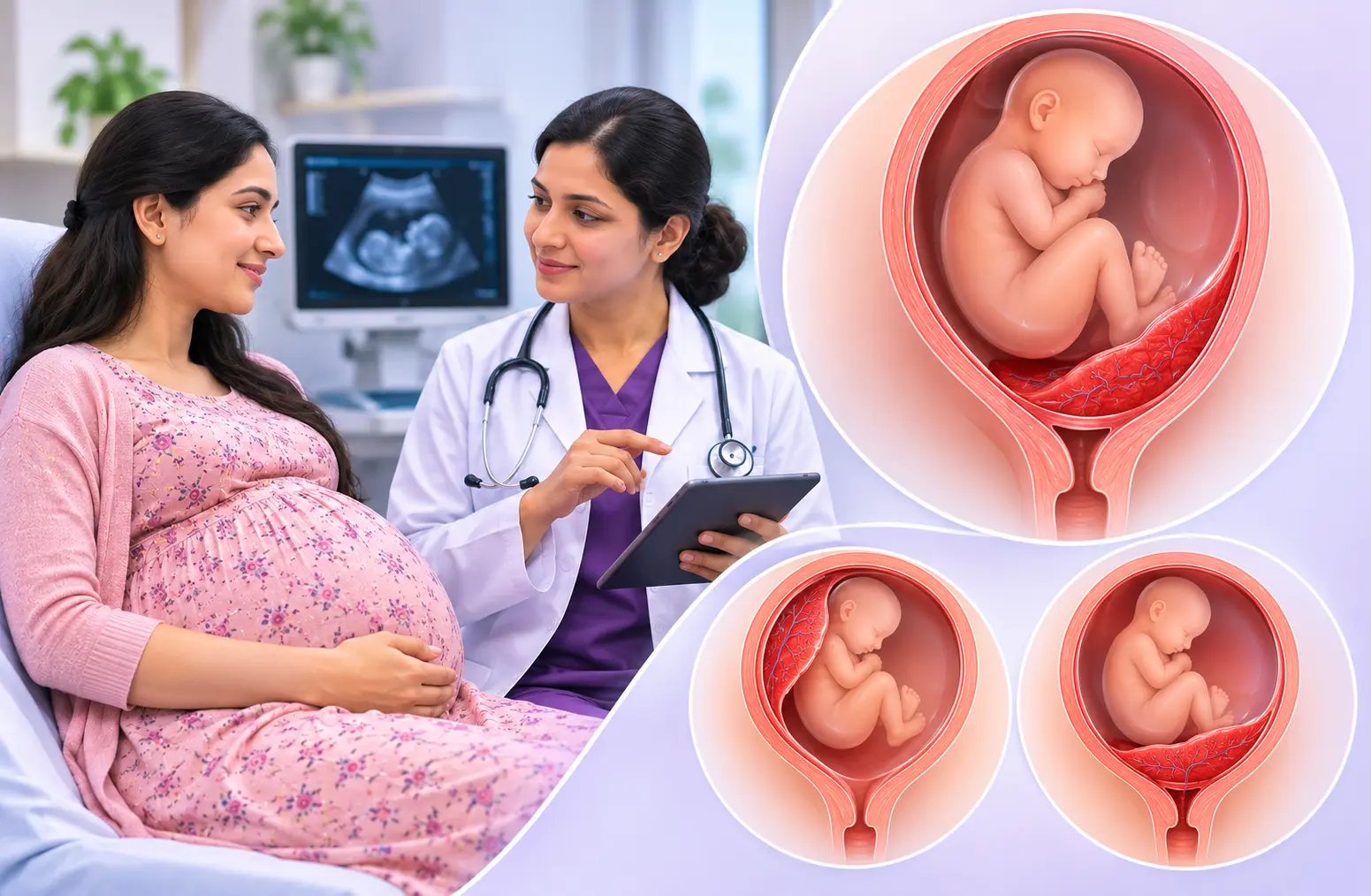
Placenta previa is when the placenta sits low in the uterus and covers part or all of the cervical OS (cervical opening) - the opening at the neck of the uterus. Normally, the placenta attaches higher up in the uterus, away from the cervical OS, leaving the birth passage clear for the baby to be born. When it covers the cervical OS, it can cause bleeding and affect how the baby is delivered.
- Complete previa: The placenta covers the whole of the cervical OS.
- Partial previa: The placenta covers part of the cervical OS.
- Marginal or low-lying placenta: The placenta lies close to the edge of the cervical OS without fully covering it.
Placenta previa is uncommon, affecting about 5.2 per 1000 pregnancies worldwide, with higher prevalence reported in Asian studies. Many low-lying placentas found early in pregnancy move away from the cervix as the uterus grows.
How Placenta Previa Affects Pregnancy and Delivery?
The placenta is rich in blood vessels, so when it covers the cervical OS, it can bleed, especially as the cervix starts to change later in pregnancy. This is why doctors monitor placenta previa closely in the second half of pregnancy. The main concern is bleeding, which can be heavy if the cervical OS opens over the placenta.
Placental position also matters for delivery, because the placenta would block the baby’s path in a vaginal birth. For this reason, a baby with placenta previa covering the cervical OS is almost always delivered by caesarean. Knowing the position in advance lets your team plan how and when to deliver safely.
Causes of Placenta Previa
The exact cause of placenta previa is not fully understood. In most cases, there is no clear reason why the placenta attaches lower down in the uterus. It depends largely on where the fertilized egg implants and where the placenta develops early in pregnancy.
This is different from the risk factors listed below. Risk factors can increase the chance of placenta previa but do not directly cause it.
It is important to know that nothing a woman did caused the placenta to lie low. Her diet, activity, or anything else within her control did not cause it. Understanding this can help ease any guilt or worry she may feel after the diagnosis.
Risk Factors and Who Is at Risk in Placenta Previa
While the exact cause is unclear, several factors can increase the risk of placenta previa. The main risk factors are below.
- Previous caesarean or uterine surgery: Scarring from a past C-section, fibroid removal, or a D&C raises the risk.
- Older maternal age: The chance rises in women over 35.
- Several previous pregnancies: Having had a number of pregnancies increases the likelihood.
- Carrying twins or more: A larger placenta is more likely to lie low.
- Smoking: Smoking during pregnancy is linked with a higher risk.
- Previous placenta previa: Having had it before makes it somewhat more likely again.
Symptoms and Signs of Placenta Previa
The most important thing to know about placenta previa symptoms is the nature of the bleeding. The classic sign is sudden, bright red bleeding from the vagina in the second half of pregnancy that is usually painless. The main signs and symptoms of placenta previa are listed below.
- Painless vaginal bleeding: Sudden, bright red bleeding that typically comes without pain is the hallmark sign.
- Bleeding later in pregnancy: It most often appears from around the middle of pregnancy onward.
- Bleeding that may stop and return: The bleeding can settle and then come back later.
- Mild cramping in some cases: Some women have mild contractions along with the bleeding.
- No symptoms at all: Some cases are silent and found only on a routine scan.
Note: The painless nature of the bleeding is a key clue because it helps distinguish placenta previa from placental abruption, where the placenta separates early, and the bleeding is usually painful. Any bleeding in pregnancy should be reported to your doctor straight away, whether or not it hurts. Prompt assessment keeps you and your baby safe.
Complications of Placenta Previa
With careful monitoring, most women with placenta previa and their babies do well. The possible complications affect both mother and baby, as set out below.
- Heavy bleeding: Bleeding can be severe, during pregnancy, at delivery or afterwards.
- Anaemia: Repeated or heavy bleeding can lower the mother’s blood count.
- Placenta accreta: The placenta can occasionally attach too deeply into the uterine wall, which needs specialist care.
- Preterm birth: Bleeding may mean the baby has to be delivered early.
- Low birth weight: An early delivery can mean a smaller baby who needs extra support.
Diagnosis and Treatment Options for Placenta Previa
Placenta previa is usually found on a routine ultrasound scan, often at the mid-pregnancy scan around 20 weeks. If it is found early, you will have follow-up scans to check whether the placenta is still close to the cervical OS as the uterus grows. Further care depends on whether you have any bleeding and how far along you are in your pregnancy.
- Follow-up scans: Repeat scans track the position of the placenta through the pregnancy.
- Activity changes: Our doctors may advise avoiding strenuous activity, heavy lifting and sometimes sexual intercourse.
- Monitoring for bleeding: You will be told to report any bleeding at once, and heavy bleeding may need hospital care.
- Planned caesarean: If the placenta still covers the cervix near term, delivery is planned by C-section.
- Care for the baby: If early delivery is likely, medicines may be given to help the baby, as advised by the doctor.
The aim of management is to keep both of you safe and to reach a safe point for delivery. Where the placenta covers the cervix at term, a planned caesarean avoids the risk of heavy bleeding in labour. Your team will set out a clear plan based on your situation.
What is the Prognosis (Outlook) for Placenta Previa?
The prognosis for placenta previa depends mainly on where the placenta lies as the pregnancy progresses. In some cases, a low-lying placenta moves further away from the cervix as the uterus grows. If this happens, a vaginal delivery may still be possible.
If the placenta continues to cover the cervical OS later in pregnancy, doctors may recommend a caesarean delivery to reduce the risk of heavy bleeding during childbirth. Follow-up scans help the maternity team track the placenta’s position and plan the timing and method of delivery.
Report any vaginal bleeding during pregnancy promptly so your doctor can assess you and your baby and adjust the care plan if needed.
What Questions Should I Ask My Doctor?
Going to your appointment with a few questions in mind can help you better understand your situation and what to expect. The questions below can be a useful starting point:
- Which type of placenta previa do I have, and is it likely to move up?
- Are there any restrictions on activities, travel, or sex that I should follow?
- What should I do if I start bleeding?
- Will I need a caesarean, and when might it be planned?
- How often will I have scans from now on?
- What signs mean I should come to hospital straight away?
Writing your questions down means you are less likely to forget them on the day. A clear conversation helps you feel more in control of your care. Your team is there to guide you at every stage.
Prevention and Precaution Tips for Placenta Previa
If you have placenta previa, a few practical precautions can help you manage the pregnancy more comfortably and know when to contact your doctor. Your care plan will depend on the position of the placenta, whether you have bleeding, and how your pregnancy progresses.
Following your doctor’s advice, attending scheduled scans, and watching for new symptoms can help your maternity team monitor the condition and plan next steps appropriately.
- Avoid smoking: Not smoking lowers one of the few changeable risks and benefits your pregnancy overall.
- Attend every scan: Regular scans track the placenta and catch any change early.
- Report bleeding at once: Tell your doctor about any bleeding straight away, however light.
- Follow activity advice: Stick to any guidance on rest, lifting and sexual intercourse given for your situation.
None of this prevents the condition itself, which is not a personal failing. It is about staying safe and giving your team the chance to act early. Good antenatal care is the most useful step of all.
Why Choose BirthRight by Rainbow Hospitals for Placenta Previa Care?
BirthRight by Rainbow Hospitals brings together obstetricians, maternal-foetal medicine specialists and newborn care under one roof, backed by three decades of expertise in women’s and children’s health. Placenta previa needs careful monitoring and a well-planned delivery, and our teams are set up to provide both. From detailed scans to planning a caesarean when needed, your care is carefully coordinated to support you and your baby throughout pregnancy and delivery.
If your baby needs to arrive early or if heavy bleeding occurs, you have access to high-risk pregnancy care and a well-equipped neonatal unit in the same place. This means help is ready whatever your delivery brings. The aim throughout is close monitoring, a safe delivery, and steady support for you and your baby.