



Postpartum Thyroiditis (Thyroiditis After Pregnancy)
Postpartum thyroiditis, or thyroiditis after pregnancy, happens when the immune system attacks the thyroid and stored thyroid hormone leaks into the blood. It can cause tiredness, anxiety, a racing heartbeat, weight changes and hair loss, and thyroid blood tests help tell it apart from postpartum depression.

Seamless support from diagnosis to post treatment care
Overview
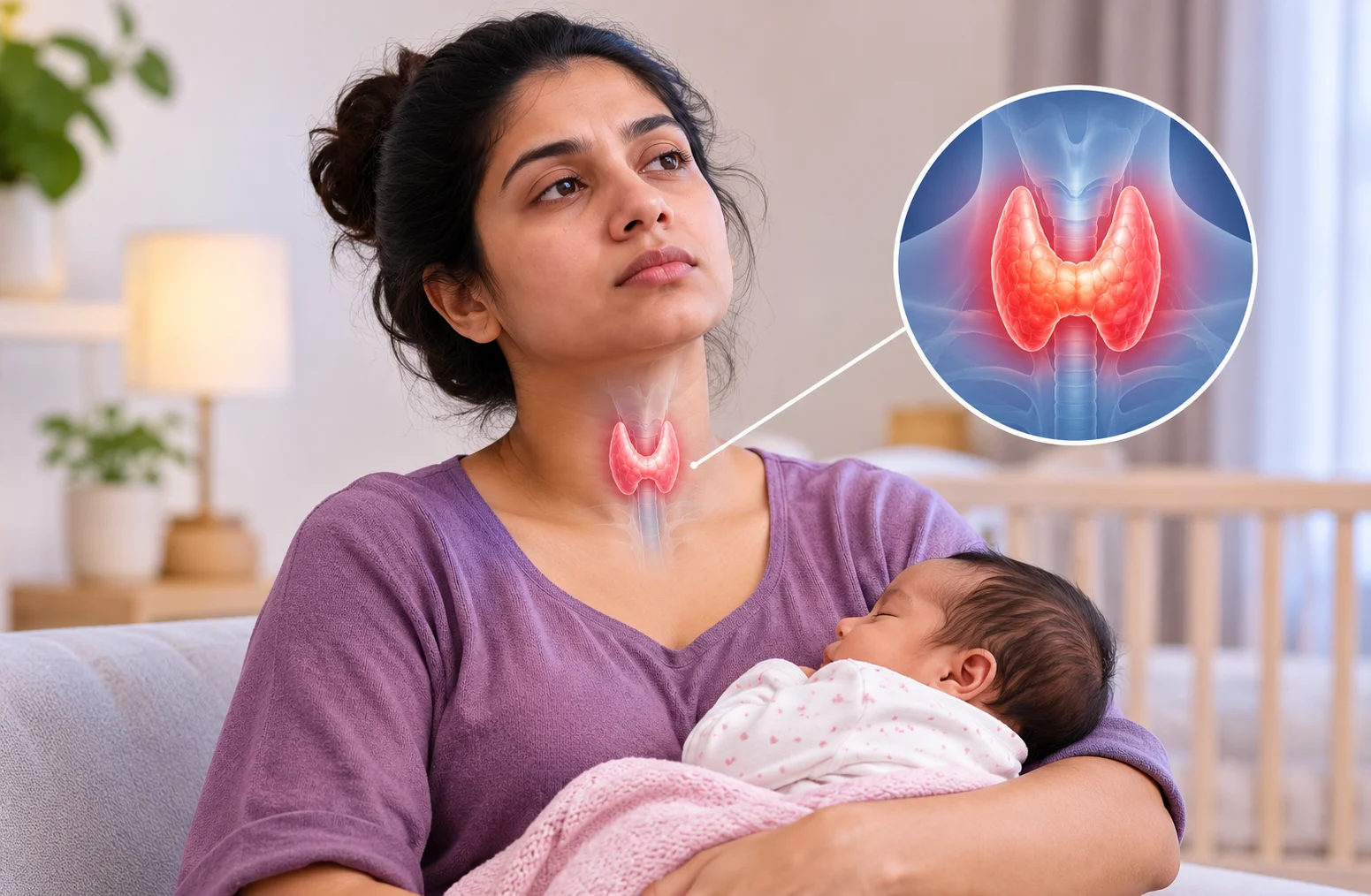
After childbirth, a woman's body gradually adjusts to the hormonal and physical changes of pregnancy. The immune system also returns to its usual activity, which can sometimes trigger changes in how certain glands function. One such change involves the thyroid gland, which plays an important role in regulating energy, metabolism, and several other body functions.
These changes can affect how a woman feels during the months after childbirth. Unusual tiredness, mood changes, weight fluctuations, or a racing heartbeat may sometimes be linked to postpartum thyroiditis. Recognising these symptoms and getting the right medical assessment can help women receive timely care and support recovery.
What Is Postpartum Thyroiditis?
Postpartum thyroiditis is an inflammation of the thyroid gland that can occur during the first year after childbirth. It can also develop after a pregnancy loss, including miscarriage or abortion. The thyroid is a small gland in the neck that produces hormones responsible for regulating energy use and metabolism.
The condition occurs when the immune system attacks the thyroid gland, causing stored thyroid hormones to leak into the bloodstream. This can initially cause an overactive phase (hyperthyroidism), followed by an underactive phase (hypothyroidism).
Postpartum thyroiditis affects approximately 8% of the pregnant population. However, not everyone experiences both phases. Some women have only an overactive or an underactive phase, while others recover without noticeable symptoms.
How Do Pregnancy and Childbirth Affect the Thyroid?
During pregnancy, the immune system adjusts to support the developing baby. After childbirth, it gradually returns to its usual activity. In some women, this change triggers an autoimmune reaction that causes inflammation of the thyroid gland.
This inflammation releases stored thyroid hormones into the bloodstream, temporarily causing an overactive thyroid (hyperthyroidism). As these stored hormones are depleted, the thyroid may become underactive (hypothyroidism). This process is sometimes called destructive thyroiditis.
How Long Does Postpartum Thyroiditis Last?
Postpartum thyroiditis usually develops in two phases, although some women experience only one.
| Phase | Typical onset after delivery | Typical duration | Common symptoms |
|---|---|---|---|
| Overactive phase (hyperthyroidism) | Usually 1–4 months | A few weeks to a few months | Palpitations, anxiety, irritability, heat intolerance and weight loss |
| Underactive phase (hypothyroidism) | Usually 4–8 months | May last several months; thyroid function often recovers within 12–18 months after delivery | Fatigue, weight gain, constipation, dry skin and sensitivity to cold |
Some women recover completely, while others may develop lasting hypothyroidism (underactive thyroid) and need ongoing treatment.
Causes of Postpartum Thyroiditis
Postpartum thyroiditis is an autoimmune condition that develops when the immune system mistakenly attacks the thyroid gland, causing inflammation. The main mechanisms involved include:
- Autoimmune response: The immune system produces antibodies that attack healthy thyroid tissue, leading to inflammation.
- Changes in immune activity after pregnancy: During pregnancy, immune activity changes to support the developing baby. After childbirth, the immune system returns towards its usual activity, which may trigger an autoimmune response against the thyroid.
The exact reason why some women develop postpartum thyroiditis while others do not is not fully understood. It is not caused by anything the mother has done, and breastfeeding or dietary choices do not cause the condition.
Who Is at Risk of Postpartum Thyroiditis?
Certain factors can increase the likelihood of developing postpartum thyroiditis. These include:
- TPO antibodies: Women who test positive for thyroid peroxidase (TPO) antibodies have a significantly higher risk of developing postpartum thyroiditis.
- Previous postpartum thyroiditis: Women who have experienced the condition after an earlier pregnancy are more likely to develop it again.
- Type 1 diabetes: Women with type 1 diabetes have an increased risk because it is an autoimmune condition.
- Other autoimmune conditions: Having another autoimmune thyroid condition or autoimmune disease may increase the risk.
- Family history: A family history of autoimmune thyroid disease may also increase susceptibility.
Having these risk factors does not mean you will necessarily develop postpartum thyroiditis. Your doctor may recommend thyroid function tests based on your medical history, risk factors and symptoms.
Symptoms of Postpartum Thyroiditis
Postpartum thyroiditis can cause symptoms of an overactive thyroid (hyperthyroidism) or an underactive thyroid (hypothyroidism). These may include anxiety, irritability, a racing heartbeat, unexplained weight changes, tiredness, low mood and difficulty concentrating. Symptoms vary from woman to woman and may be mistaken for normal changes after childbirth.
1. Overactive (early) phase
When stored thyroid hormones enter the bloodstream, symptoms may include:
- Anxiety or feeling unusually restless.
- Irritability.
- Difficulty sleeping (insomnia).
- Fast or pounding heartbeat.
- Increased sensitivity to heat.
- Shaky hands.
- Unexplained weight loss.
2. Underactive (later) phase
As thyroid hormone levels decrease, symptoms may include:
- Persistent tiredness and low energy.
- Low mood or difficulty concentrating (sometimes described as brain fog).
- Increased sensitivity to cold.
- Dry skin and hair loss.
- Constipation.
- Muscle aches or joint pain.
- Possible changes in breast milk supply.
Not every woman experiences both phases, and some may have very mild symptoms.
It is also important to remember that postpartum depression and anxiety can occur alongside postpartum thyroiditis. They need separate assessment and appropriate care rather than assuming that all mood changes are caused by thyroid hormone changes.
Since these symptoms can overlap with normal postpartum recovery, thyroid blood tests can help identify whether changes in thyroid function are contributing to them.
Consult your doctor if you experience a persistent racing heartbeat, unusual tiredness or significant mood changes.
Seek emergency medical care if a racing heartbeat occurs with chest pain, breathlessness or fainting.
If you experience thoughts of harming yourself, seek urgent mental health support. You can also contact India's Tele-MANAS helpline for free, 24-hour mental health support:
- 14416
- 1800-891-4416 (toll-free)
How Is Postpartum Thyroiditis Diagnosed?
Postpartum thyroiditis is diagnosed through blood tests that measure thyroid hormone levels and check for thyroid antibodies. Your doctor may also consider your symptoms and medical history to distinguish it from other thyroid conditions.
1. Thyroid blood tests
Your doctor may recommend the following tests:
- TSH and free T4: These tests measure thyroid function and help identify whether the thyroid is overactive or underactive.
- Thyroid antibodies: A thyroid peroxidase (TPO) antibody test can support the diagnosis. However, positive antibodies do not always indicate active thyroid disease, and some women with postpartum thyroiditis may test negative.
- Repeat thyroid tests: These help monitor changes in thyroid hormone levels as the condition progresses.
2. How Is It Different From Graves' Disease?
Graves' disease is another autoimmune condition that can cause an overactive thyroid after childbirth but requires different treatment.
Your doctor may use the following to distinguish between the two:
- TRAb test: TSH-receptor antibodies (TRAb) are commonly present in Graves' disease and help distinguish it from postpartum thyroiditis.
- Symptoms and timing: Postpartum thyroiditis may progress from an overactive to an underactive phase, unlike the typical course of Graves' disease.
- Thyroid ultrasound: This may be recommended when further assessment is needed.
Radioactive iodine uptake testing is generally avoided during breastfeeding.
When Should You Get Your Thyroid Tested?
If you experience symptoms such as a racing heartbeat, unexplained weight changes or unusual tiredness during the first 12 months after childbirth, consult your doctor. Women with type 1 diabetes or other risk factors should also discuss thyroid testing with their doctor.
Complications of Postpartum Thyroiditis
Postpartum thyroiditis usually improves over time, but some women may develop lasting thyroid problems or experience a recurrence after another pregnancy.
1. Permanent hypothyroidism
Some women develop permanent hypothyroidism (an underactive thyroid) and may need long-term thyroid hormone replacement. The risk is higher in women with TPO antibodies.
2. Recurrence after pregnancy
Postpartum thyroiditis can return after a subsequent pregnancy. Women who have experienced the condition should discuss thyroid monitoring with their doctor during and after future pregnancies.
3. Changes in mood and future pregnancy planning
Postpartum thyroiditis has been studied for its possible association with postpartum depression, but the evidence is mixed. Untreated hypothyroidism can also contribute to persistent tiredness, low energy and mood changes. It is important to identify and manage thyroid problems, particularly when planning another pregnancy.
Regular thyroid testing helps identify persistent or recurring thyroid problems so that appropriate treatment can be started.
Treatment Options for Postpartum Thyroiditis
Treatment depends on the phase of the condition, the severity of symptoms and whether you are breastfeeding or planning another pregnancy. Many women do not need medication because thyroid function often returns to normal on its own.
1. Monitoring
If symptoms are mild and thyroid hormone levels are improving, your doctor may recommend regular blood tests without medication. This helps track recovery and identify changes that may need treatment.
2. Treating the overactive phase
The early overactive phase usually does not require anti-thyroid medicines because it occurs when stored thyroid hormones are released into the bloodstream.
If symptoms such as palpitations or tremors are troublesome, your doctor may prescribe a beta-blocker such as propranolol for short-term relief. Propranolol can be used during breastfeeding under medical supervision.
Your doctor may repeat thyroid blood tests every few weeks to monitor hormone levels. If hyperthyroidism persists beyond a few months, further tests may be needed to check for Graves' disease.
3. Treating the underactive phase
If thyroid hormone levels become low and cause significant symptoms, your doctor may prescribe levothyroxine, a medicine that replaces thyroid hormones.
Treatment is more likely if symptoms are significant, thyroid hormone levels are markedly low, or you are planning another pregnancy. Levothyroxine is considered safe during breastfeeding.
For best absorption:
- Take levothyroxine on an empty stomach with water.
- Keep an adequate gap between levothyroxine and calcium or iron supplements, as these can reduce its absorption.
- Do not stop or restart the medication without consulting your doctor and checking your thyroid levels.
4. Longer-term follow-up
Your doctor will monitor thyroid hormone levels to check whether the gland has recovered. If you need levothyroxine, your doctor may review the treatment after about 6–12 months to determine whether you still need it.
Women with a history of postpartum thyroiditis should have their thyroid function checked at least once a year to identify lasting thyroid changes.
What is the Prognosis (Outlook) for Postpartum Thyroiditis?
Most women recover normal thyroid function within about 12–18 months after childbirth. However, some develop permanent hypothyroidism and need long-term levothyroxine treatment.
The condition can also return after a future pregnancy. Women who have experienced postpartum thyroiditis should inform their doctor when planning another pregnancy.
Even after recovery, thyroid function should be checked at least once a year to identify any lasting thyroid changes.
What Questions Should I Ask My Gynecologist?
Discussing your symptoms and treatment options can help you understand your condition and plan follow-up care.
1. About symptoms and diagnosis
- Could my symptoms be related to a thyroid problem?
- Which blood tests do I need?
- Is my thyroid currently overactive or underactive?
2. About treatment and breastfeeding
- Do I need medication, or is monitoring enough?
- Are my prescribed medicines safe while breastfeeding?
- How often should I repeat my thyroid tests?
3. About long-term health and future pregnancies
- Will my thyroid function return to normal?
- Will I need thyroid medication long-term?
- Could postpartum thyroiditis return after another pregnancy?
Your gynecologist can help answer these questions based on your symptoms, test results and individual health needs.
Can Postpartum Thyroiditis Be Prevented?
Postpartum thyroiditis cannot currently be prevented because it is linked to changes in immune system activity after pregnancy. However, regular monitoring and timely medical care can help identify thyroid changes and manage symptoms.
Some useful steps include:
- Know your risk: Tell your doctor if you have thyroid antibodies, type 1 diabetes or a previous history of postpartum thyroiditis.
- Discuss thyroid testing: Ask your doctor whether you need thyroid function tests after childbirth, particularly if you have known risk factors.
- Report persistent symptoms: Do not dismiss ongoing tiredness, low mood, unexplained weight changes or a racing heartbeat.
- Attend follow-up appointments: Regular blood tests help identify changes in thyroid function and determine whether treatment is needed.
Can You Control Thyroid Problems Naturally?
No diet, supplement or home remedy has been proven to prevent or cure postpartum thyroiditis. A balanced diet with adequate iodine intake, as advised by your doctor, can support overall thyroid health. Avoid taking iodine, selenium, biotin or herbal supplements without medical advice. Biotin, commonly found in hair and nail supplements, can interfere with thyroid blood test results.
Adequate sleep, rest and emotional support can help manage postpartum recovery and improve overall wellbeing. However, these measures cannot replace thyroid testing, medical follow-up or prescribed treatment.
Why Choose BirthRight by Rainbow Hospitals for Postpartum Thyroiditis Care?
Managing postpartum thyroiditis requires appropriate assessment, thyroid monitoring and treatment based on individual needs. At BirthRight by Rainbow Hospitals, we focus on supporting women's health during pregnancy and after childbirth.
- Postnatal care: We help assess health concerns that may arise during postpartum recovery and guide women on appropriate medical evaluation.
- Coordinated specialist care: Our maternity teams guide women towards the appropriate specialist care when thyroid-related concerns arise.
- Breastfeeding-aware treatment: We encourage treatment decisions that consider the mother's health and breastfeeding needs.
- Continued monitoring: We emphasise appropriate follow-up to identify lasting changes in thyroid function.
- Patient guidance: We help women understand their symptoms, test results and available care options.
Our focus is to help women recognise health changes after childbirth and seek appropriate care without unnecessary anxiety.
If you notice symptoms of postpartum thyroiditis or have concerns about your thyroid health after childbirth, book a consultation at BirthRight by Rainbow Hospitals. Our team can help assess your symptoms, guide you on the appropriate thyroid tests and discuss suitable treatment and follow-up based on your needs.

Find a Doctor and Book Appointment Online
Meet our specialist doctors who bring together clinical expertise, compassion, and personalised care to support your health and well-being. Choose from 1,300+ specialists across our network and book an appointment with BirthRight and Rainbow Children Hospitals, offering 24*7 support to you and your family.

Dr. Pranathi Reddy A
Clinical Director – Obstetrics & Gynecology.
English,Hindi,Telugu Banjara Hills

Dr. Gauri Vinayak Dhamangaonkar
Senior Consultant - Fetal Medicine
15 Years English,Hindi,Marathi,Telugu Kondapur OP, Banjara Hills

Dr. Shruthi Reddy Poddutoor
Consultant Obstetrician, Gynecologist & Laparoscopic Surgeon
English,Telugu Banjara Hills

Dr. Himabindu Veerla
Consultant Obstetrician, Gynecologist & Laparoscopic Surgeon
English,Telugu Banjara Hills

Dr. Bhargavi Reddy K
Consultant - Obstetrics and Gynecology
10 Years English,Hindi,Telugu Banjara Hills, Attapur Clinic

Dr. Annie Pranutha P
Consultant Obstetrics and Gynecology
9 Years English,Hindi,Telugu Banjara Hills, Attapur Clinic

Dr. Sasikala Kola
Consultant Obstetrician & Gynecologist
English,Hindi,Telugu Banjara Hills

Dr. Atigadda Vijaya
Consultant - Obstetrics & Gynecology
Hindi,Telugu Banjara Hills, Himayatnagar, Attapur Clinic

Dr. Nishanth Reddy Inavolu
Visiting Consultant Physician and Diabetologist & Internal Medicine
English,Hindi,Telugu Banjara Hills, Himayatnagar

Dr. Tulika Tayal
Consultant - Fetal Medicine
English,Telugu Banjara Hills

Dr. M Prathyusha Reddy
Consultant Obstetrics & Gynecology
English,Telugu Banjara Hills

Dr. Nithya Narasimha Murthy
Consultant -Psychiatrist
English,Hindi,Telugu Kondapur OP, Banjara Hills, Child Development Centre - Banjarahills Rd No 10

Dr. Brundavani
Consultant - Nutritionist
English,Hindi,Telugu Kondapur OP, Hydernagar, Banjara Hills, Child Development Centre - Banjarahills Rd No 10

Dr. Niveditha Chalmeda
Consultant
English,Telugu Banjara Hills

Dr. Kirti Reddy Patlolla
Consultant Obstetrics and Gynaecology
English,Telugu Banjara Hills, Attapur Clinic

Dr. Tuheena Sharma
Consultant - Perinatal Physiotherapy
10 Years English,Telugu Banjara Hills

Dr. Aditi Shah
Consultant - Fetal Medicine
English,Telugu Banjara Hills

Dr. Swathi Naga Tulasi Rayapureddy
Lactation Consultant
8 Years English,Telugu Banjara Hills

Dr. Swetha Reddy. S
CONSULTANT PERINATAL PSYCHIATRIST AND WOMEN MENTAL HEALTH SPECIALIST
13 Years English,Hindi,Telugu Banjara Hills

Dr. Addu Kiranmayi
Chief Clinical Nutritionist and Lifestyle Medicine Consultant
15 Years English,Hindi,Telugu Himayatnagar, Banjara Hills

Dr. Palle Nalini Kumari
Lactation Consultant
17+ Years English,Hindi,Telugu Banjara Hills

Dr. Nazia Tabassum
Consultant - Breast, Plastic & Reconstructive Surgeon
9 Years English,Hindi,Telugu,Urdu Banjara Hills

Dr. Sruthi Cheera
Consultant Breast Surgeon
5 Years English,Hindi,Kannada,Telugu Banjara Hills

Dr. Supriya Reddy
Lactation Consultant
5 Years English,Hindi,Telugu Banjara Hills

Dr. Niraj Krishnamurthy Yanamandra
Senior Consultant Obstetrician & Gynaecologist, Laparoscopy & Hysteroscopy Surgeon
English,Hindi,Marathi,Telugu Hydernagar, Banjara Hills, Financial District

Dr. B. Rao Bahadur
Consultant – Obstetrician & Gynecologist, Laparoscopic ,& Hysteroscopic Surgeon
22 Years English,Hindi,Konkani,Marathi,Telugu Banjara Hills, Kondapur OP

Dr. Sneha Kulkarni
Consultant - Child, Adolescent & Adult Psychiatrist
10 Years English,Hindi,Kannada,Telugu Secunderabad, Banjara Hills, Child Development Centre - Banjarahills Rd No 10

Dr. Lavanya Janagama
Consultant – Obstetrics & Gynecology
10+ Years English Banjara HillsLeading Hospitals for Women Care
Rainbow Children's Hospital stands as a testament to the hospital's continual pursuit of excellence and innovation, providing specialized care for women and children


















chennai
Blogs
Discover our most recent health articles provided by our reliable experts.




What Are People Saying About Us
Embark on a journey of inspiration and hope with our patient success stories, complemented by informative videos from our dedicated doctors.




Media
 Common Gynaecological Surgeries to Fix Female Reproductive Issues
 Healthy Woman - Healthy World
 Healthier Women For a Healthier Future...
 Rainbow Children’s Hospital & BirthRight by Rainbow Launch Video Consultation Facilities
 Dr.Pranthi Reddy
 What is the use of that?
 Can you try this time?
 Pregnant Women are Not Unfit
 Declining Age of Menarche - A Matter of Concern
 Important Facts about Cervical Cancer
 Be careful before preempting
 Flu every month!
 Menstrual cramps
 Premature delivery
 Whether laughing or coughing...why?
 Multi - Tasking may be Cool but it's not Healthy
 Pregnant and Worried about COVID-19? Here's Everything you Need to know
 Video Consultation in Pandamic Situation for Pregnancy Women's
 Women.. Various types of cysts
 Recurrent Pregnancy Loss in Women
 Early Onset of Puberty: Causes, Symptoms and Treatment Options
Common Gynaecological Surgeries to Fix Female Reproductive Issues
Healthy Woman - Healthy World
Healthier Women For a Healthier Future...
FAQs
How can I tell postpartum thyroiditis from postpartum depression?
What are the symptoms of postpartum thyroiditis?
How long does postpartum thyroiditis last?
How to control thyroid naturally after delivery?
Is postpartum thyroiditis serious or life-threatening?
Is postpartum hair loss normal or a thyroid problem?
Can postpartum thyroiditis happen after a miscarriage or abortion?
Can postpartum thyroiditis appear months after I thought I had recovered?
Can postpartum thyroiditis make me gain or lose weight?
How is postpartum thyroiditis different from Hashimoto's disease?
Can postpartum thyroiditis affect my baby?
What are the early signs of hypothyroidism in babies?
Does a normal thyroid test at six weeks rule out postpartum thyroiditis?
Can thyroid problems from pregnancy come back years later?
Can I keep breastfeeding if I have postpartum thyroiditis?
Will I need thyroid medicine for life?
Quick Links
Free Calculators to Track and Predict your Pregnancy
Gynecologist in Other Locations
Women's Health Conditions We Treat
- Mastitis (Breast Infection)
- PCOS (Polycystic Ovary Syndrome)
- Uterine Fibroids (Leiomyomas)
- Recurrent Pregnancy Loss
- Blocked Fallopian Tubes (Fallopian Tube Obstruction)
- Gestational Diabetes in Pregnancy
- Incompetent Cervix (Cervical Insufficiency)
- COVID-19 in Pregnancy
- Cytomegalovirus (CMV) in Pregnancy
- HELLP Syndrome
- Luteal Phase Defect
- Vasa Previa
- Listeria in Pregnancy
- Placenta Previa
- Endometrial Polyps (Uterine Polyps)
- Congenital Heart Disease in Pregnancy
- Hyperemesis Gravidarum (Severe Morning Sickness)
- Preeclampsia (toxemia)
- Fetal Distress (Non-Reassuring Fetal Status)
- Postpartum Haemorrhage (PPH)
- Placental Abruption (Abruptio Placentae)
- Placenta Accreta
- Postpartum Depression (PPD)
- Rhesus (Rh) Incompatibility
- Syphilis in Women
- Thalassemia in Pregnancy
- Gestational Thrombocytopenia
- Diabetes in Pregnancy
- Uterine Rupture
- Migraine in Pregnancy
- Eclampsia
- Uterine Inversion (Inverted Uterus)
- Rubella in Pregnancy
- Pulmonary Hypertension in Pregnancy
- Hydrops Fetalis (Fetal Hydrops)
- Iron-Deficiency Anaemia in Pregnancy
- Hypothyroidism in Pregnancy
- Pregnancy Constipation
- Retained Placenta
- Antiphospholipid Syndrome (APS)
- Subchorionic Hemorrhage
- Asthma in Pregnancy
- Amniotic Fluid Embolism (AFE)
- Placenta Increta
- Fetal Macrosomia
- Gestational Trophoblastic Disease (GTD)
- Postpartum Psychosis
- Chronic Hypertension in Pregnancy
- Gestational Hypertension
- Oligohydramnios (Low Amniotic Fluid)
- Miscarriage (Spontaneous Abortion)
- Breast Abscess
- Ovarian Cancer
- Placental Insufficiency
- Diarrhoea in Pregnancy
- Chorioamnionitis (Intra-Amniotic Infection)
- Arrhythmias in Pregnancy
- Amenorrhea
- Dysmenorrhea
- Menopause
- Stillbirth
- Abnormal Uterine Bleeding
- ABO Incompatibility in Pregnancy
- Adenomyosis